
IRS Webinar Highlights Diplomatic Pathways for Stability in US-Iran Relations
Islamabad: The Institute of Regional Studies (IRS) hosted an expert webinar titled “Towards Stability: US, Iran and the Path Forward for Peace”, bringing together leading scholars and policy experts to discuss the evolving dynamics of US-Iran relations and their implications for regional and global stability.
The webinar featured Dr. Lyudmila Aleksandrovna Pechishcheva, Senior Research Fellow at the Institute of China and Contemporary Asia of the Russian Academy of Sciences, as the Eminent Speaker. The session explored emerging diplomatic trends, regional security concerns, global energy challenges, and prospects for peace in the Middle East.
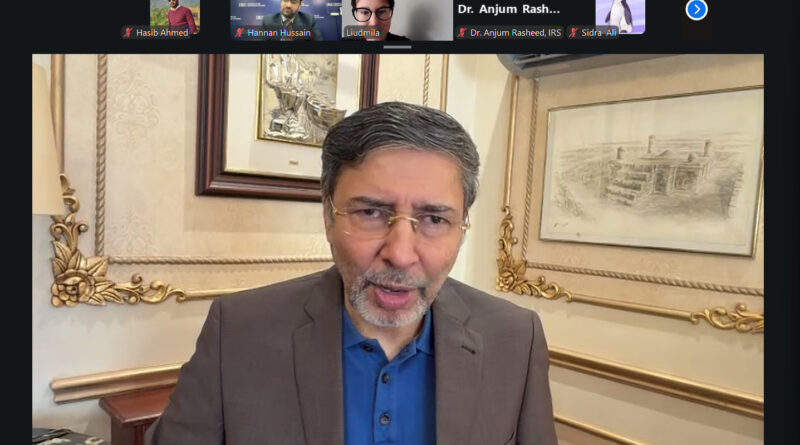
In his opening remarks, Ambassador Jauhar Saleem, President of the Institute of Regional Studies, emphasized that tensions between the United States and Iran extend far beyond regional security concerns. He noted that prolonged instability could disrupt global energy supplies, natural gas flows, fertilizer production, and international food security, potentially triggering inflationary pressures and wider economic shocks worldwide.
Ambassador Saleem stressed the urgent need for sustained diplomatic engagement and a structured negotiation framework to prevent escalation. He highlighted the significance of ongoing efforts aimed at restoring stability, including the reopening of key maritime routes such as the Strait of Hormuz, the resumption of shipping activities, and phased diplomatic negotiations focused on de-escalation. He also underscored the importance of sanctions relief, regional security guarantees, and coordinated international cooperation, while acknowledging Pakistan’s constructive role in supporting dialogue and regional stability.

assessment of potential future scenarios in US-Iran relations. She outlined a range of possibilities, including a comprehensive diplomatic settlement or “grand bargain” that could lead to structured nuclear limitations and Iran’s gradual reintegration into the global economy.
She also discussed a more likely “no-war, no-peace” scenario, characterized by partial agreements, intermittent negotiations, and persistent tensions. Additionally, Dr. Pechishcheva warned of a pessimistic outcome in which geopolitical rivalry, economic sanctions, and internal instability could contribute to renewed escalation.
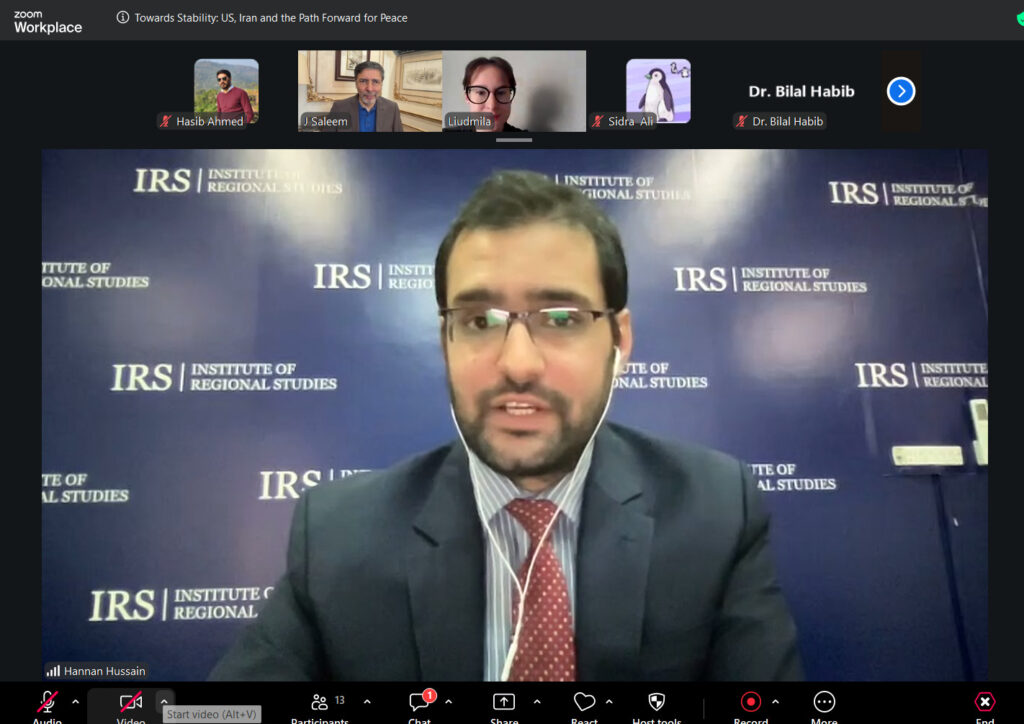
Participants highlighted the strategic significance of the Strait of Hormuz, one of the world’s most important energy corridors, noting that any disruption could have serious consequences for global oil markets, maritime trade, and energy security. The discussion further explored emerging diplomatic frameworks that may involve phased sanctions relief, partial unfreezing of assets, and renewed negotiations on Iran’s nuclear program, including enrichment limits and verification mechanisms accompanied by reciprocal security assurances.
The webinar also examined broader geopolitical developments, including debates surrounding multipolarity and the shifting global balance of power. Participants reflected on the role of major international actors in shaping future outcomes in the Middle East and fostering regional stability.
The session concluded with a consensus that sustained diplomacy, calibrated restraint, and multilateral engagement remain essential to preventing conflict and advancing long-term peace, stability, and economic security in the region and beyond.