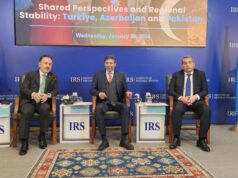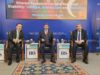
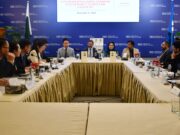

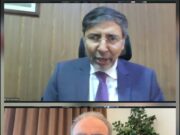
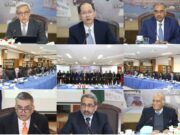


ISLAMABAD :(The News Mark) The Institute of Regional Studies (IRS) convened the inaugural post-COP30 seminar to examine the outcomes of the UN climate conference held in Belém, Brazil, and its implications for Pakistan and other climate-vulnerable countries.
Ambassador Jauhar Saleem opened the discussion by highlighting Pakistan’s disproportionate exposure to climate risks despite contributing less than 1% to global greenhouse gas emissions. He spoke about shrinking glaciers, increased water scarcity, deforestation, and worsening air pollution. He noted that cities like Lahore now rank among the most polluted globally. He also emphasized that fossil fuel consumption continues to dominate global energy use, while non-fossil sources remain far lower. While acknowledging Pakistan’s progress in solar energy, especially micro-solar initiatives, he stressed that resilience alone is insufficient without measured finance and implementation.

Ms. Zainab Naeem, Associate Research Fellow, SDPI, described COP as an important diplomatic space shaped as much by politics as by science. She highlighted discussions on transitioning away from fossil fuels, deforestation, and mitigating black carbon, a short-lived but highly dangerous pollutant from biomass and crop residue burning.Hamza Haroon, Regional Director of South Asia for Climate Vulnerable Forum (CVF-V20) focused on climate finance and adaptation and highlighted the mismatch between climate losses and available funding. He noted that while new financing windows offer USD $150 to 250 million, these amounts are inadequate compared to losses from climate disasters worth tens of billions.
Tahanyat Satti, negotiator at UNFCCC, stressed the importance of continuity in negotiations and warned that frequent changes in negotiators weaken developing countries’ positions.

The event was moderated by Talha Tufail Bhatti, ARO Climate Governance, Policy and Food Security Program. He highlighted that post-COP discussions are critical to connect global climate commitments with local realities.