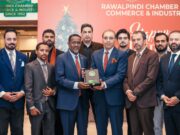
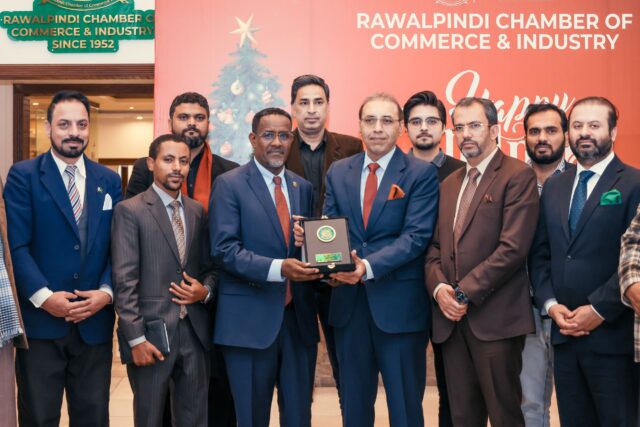
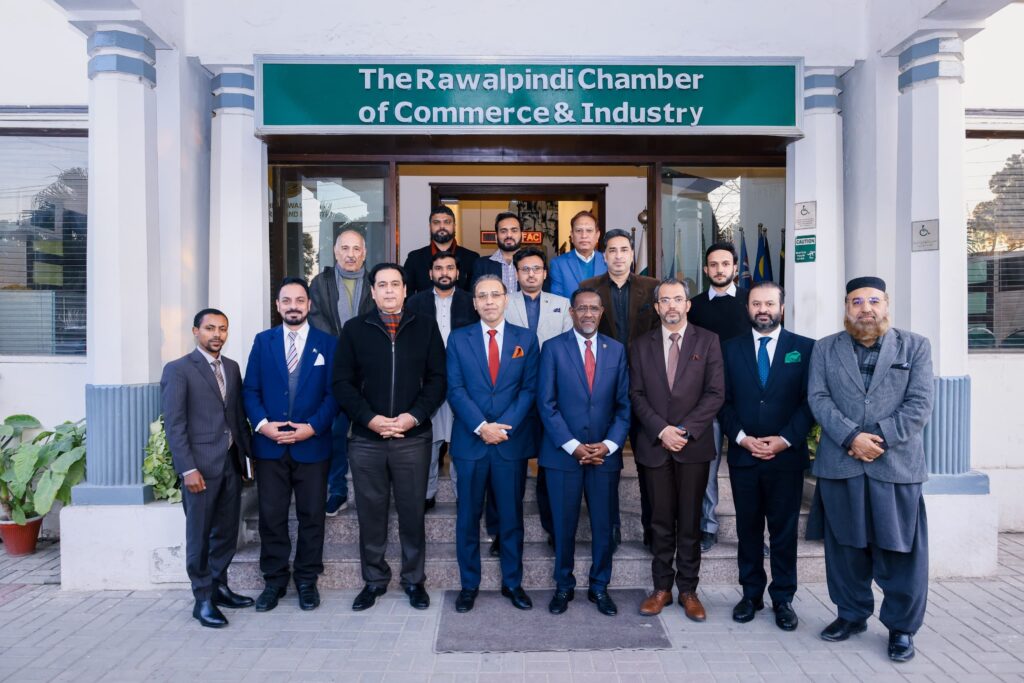
ISLAMABAD :(The News Mark) H.E. Dr. Oumer Hussein Oba, Ambassador-designate of the Federal Democratic Republic of Ethiopia (FDRE) to the Islamic Republic of Pakistan, paid a maiden visit to the Rawalpindi Chamber of Commerce and Industry (RCCI) on Wednesday to discuss bilateral cooperation, and highlight extraordinary investment opportunities within Ethiopia’s flourishing economic sectors. The meeting covered a broad range of issues, including trade, investment, institutional linkages, and future collaborations. Both sides discussed mechanisms for seamless cooperation to further strengthen bilateral relations between the two nations.
Addressing the business gathering representing various economic sectors of Pakistan, the Ambassador briefed them on the homegrown economic reforms undertaken by the Ethiopian government. These reforms have created massive business opportunities in five primary sectors including agriculture and agro-processing, manufacturing, mining, tourism, and ICT, he added.
The Ambassador also urged the business community to participate in the high-level “Invest in Ethiopia” forum, scheduled for March 26–27, 2026 in Addis Ababa, Ethiopia. The event is expected to bring together over 700 international investors, policymakers, and development partners from across the globe. He assured the RCCI that the Ethiopian Embassy in Islamabad would provide full support to Pakistani businesses looking to explore the untapped potential of bilateral economic relations. H.E. Usman Shaukat, President of the RCCI, welcomed the Ambassador and highlighted the growing cooperation between the Embassy and the Chamber. He emphasized that people-to-people relations are the key drivers of economic diplomacy, requiring a concentrated focus from both sides to bring the two nations closer. The President further highlighted the immense potential for trade and investment, praising the economic development achieved by Ethiopia under the leadership of Prime Minister H.E. Dr. Abiy Ahmed. Senior Vice President Mr. Khalid Farooq Qazi, Vice President Mr. Fahad Barlas, and Former President Mr. Raja Amer also spoke regarding the future of Ethiopia-Pakistan relations. The discussion concluded with a Q&A session and a cake-cutting ceremony organized by the RCCI to celebrate Christmas.
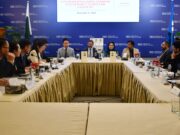
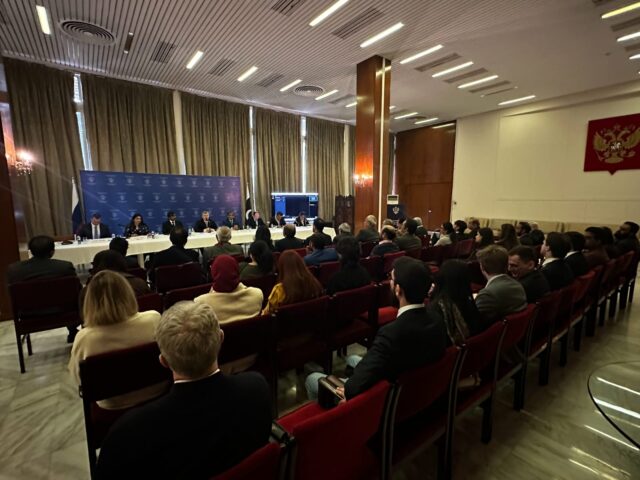
On December 18, 2025, the Embassy hosted a roundtable discussion titled “Russia-Pakistan: Overview of the Modern Stage of Bilateral Relations,” organized in collaboration with the Consortium for Asia Pacific and Eurasian Studies (CAPES). The event brought together over 40 representatives from universities and research institutions from various Pakistani cities, including Islamabad, Peshawar, Lahore, Faisalabad, Karachi, Sargodha, and Okara.
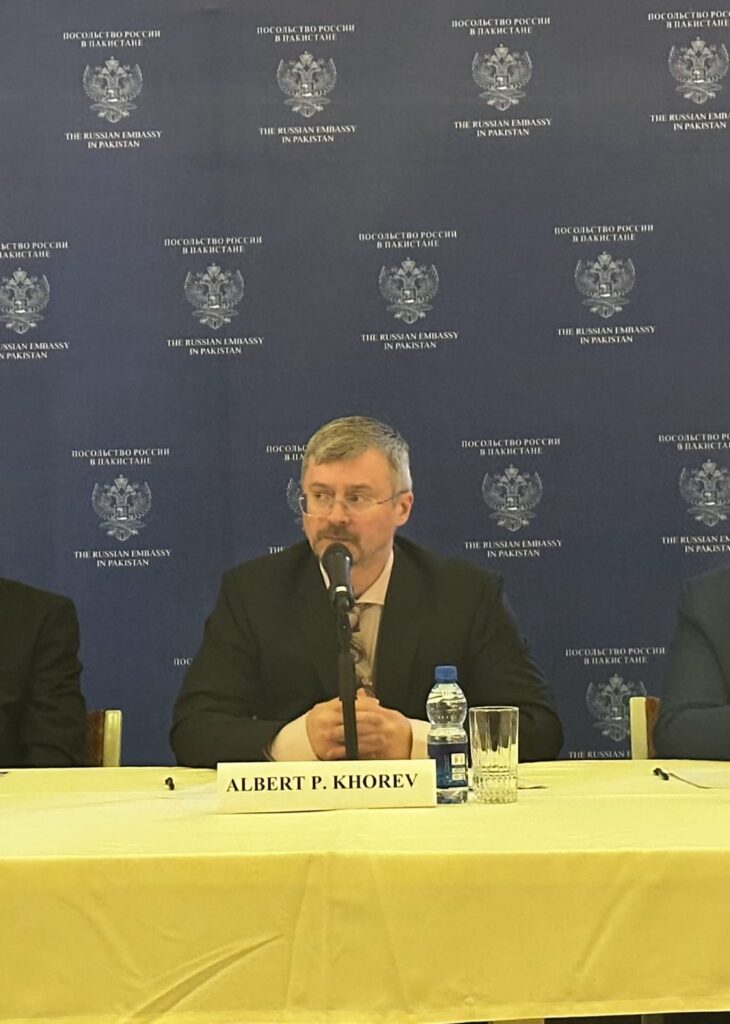
The Russian side was represented by Ambassador Albert P. Khorev and Denis Nevzorov, the Trade Representative of Russia in Islamabad.
In his opening remarks, Ambassador Khorev noted the growing dynamics of the Russia-Pakistan political dialogue and the intensified contacts between the two countries’ legislative bodies. He also emphasized the steady development of cultural ties and the constructive interaction between religious organizations in Russia and Pakistan. He added that the populations of both countries were united by their commitment to traditional spiritual and moral values. In this regard, the Ambassador confirmed Russia’s readiness to increase efforts to implement joint projects aimed at deepening cooperation between the two friendly neighboring countries within the Eurasian region.
Mr. Nevzorov informed the participants of the key trends in bilateral trade and economic cooperation in 2025. He also presented the 16th INNOPROM International Industrial Exhibition, which will take place in Yekaterinburg, Russia, on July 6–9, 2026.
Dr. Gul-i-Ayesha Bhatti, Assistant Professor at the Jinnah School of Public Policy at NUST University and Director of CAPES Eurasian Charter, highlighted the political and diplomatic dimensions of Russia-Pakistan relations. She emphasized the significant role of the Russian Embassy in strengthening the ties between the two countries’ academic communities. She also highlighted the positive results achieved during the 10th meeting of the Russia-Pakistan Intergovernmental Commission. Dr. Bhatti expressed her high appreciation for Russian initiatives aimed at expanding constructive cooperation between Moscow and Islamabad, the two capitals that closely coordinate their efforts within the SCO and other international and regional platforms.
Associate Professor at the University of Sargodha Dr. Sundas Khizar presented an analysis of economic cooperation between Russia and Pakistan, focusing on the implementation of new infrastructure projects aimed at expanding bilateral trade. She stressed the urgency of increasing Russian petroleum product supplies to Pakistan, a country facing increased hydrocarbon demand. Dr. Khizar confirmed the high importance of the Greater Eurasian Partnership initiative, presented by Russian President Vladimir Putin. The initiative’s relevance is steadily increasing amidst the diminishing international influence of Western countries
In his speech, Prof. Dr. Shabir Ahmad Khan of the University of Peshawar’s Area Studies Center emphasized that Russia and Pakistan have achieved significant results in cultural cooperation despite growing international tensions. At the same time, he acknowledged the language barrier between the populations of the two states. In this regard, Prof. Dr. Shabir Ahmad Khan welcomed Russia’s efforts to organize Russian language courses at Pakistani universities and schools.
The Vice Chancellor of the University of Okara, Prof. Dr. Sajjad Mubin, highlighted the importance of educational exchanges between the two countries. He emphasized the high status of Pakistani graduates of Soviet and Russian universities in Pakistani society. Considering the high standards of education at Russian universities, he advocated for initiatives that would provide more opportunities for Pakistani citizens to study in Russia. To this end, he recommended continuing the practice of organizing joint conferences and seminars to define optimal ways to expand educational exchanges.
The Vice Chancellor of the Faisalabad Agriculture University, Prof. Dr. Zulfiqar Ali, drew attention to the urgent need for Russia and Pakistan to expand their agricultural cooperation. He emphasized the importance of this area for improving regional food security and strengthening Pakistan’s economic stability. He praised the Russian agricultural sector’s development, highlighting the exceptional quality of Russian agricultural products. Dr. Ali stated that Pakistan requires Russian agricultural technologies, including machinery and fertilizers, to increase its agricultural productivity. Furthermore, he advocated for the establishment of additional Russian language courses at Pakistani educational institutions to reduce the language barrier between the two countries’ citizens.
Further discussions produced initiatives aimed at strengthening bilateral people-to-people contacts. These initiatives included resuming direct flights between the two countries, launching joint educational programs at Russian and Pakistani universities, and translating Russian classical and modern literary works into Urdu.
The event confirmed the strong interest of the Pakistani academic and scientific communities in further enhancing dialogue with the Russian Federation and expanding economic, cultural, educational, and humanitarian ties between the citizens of the two friendly states
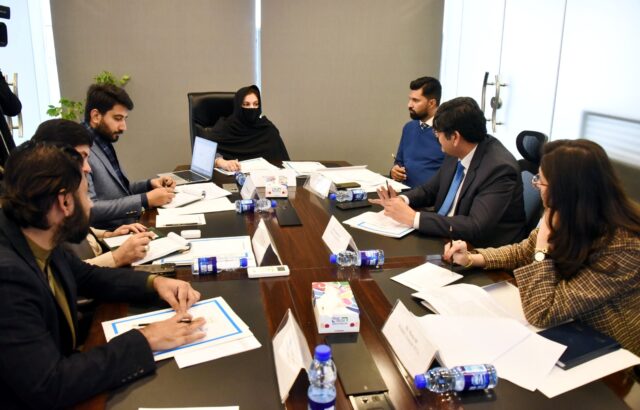
ISLAMABAD:(The News Mark) The Young Parliamentarians Forum (YPF) convened a pivotal meeting with the Shaoor Foundation for Education & Awareness (SFEA) today at the Parliament House, Islamabad. The meeting, chaired by President YPF Syeda Nosheen Iftikhar, MNA, focused on deliberations regarding the implementation of the recently approved joint work plan to strengthen youth initiatives across Pakistan. President Syeda Nosheen Iftikhar emphasized YPF’s unwavering commitment to empowering Pakistan’s youth through targeted, collaborative action, informing participants that YPF will nominate youth ambassadors from universities to actively counter polarization, misinformation, disinformation, and drug proliferation.
The discussion centered on key pillars of the work plan, including strengthening networking forums for youth leaders, capacity-building programs for legislators, organizing a grand dialogue with youth representatives, launching public awareness campaigns, amplifying social media efforts, and pursuing legislative interventions to address gaps in youth-related laws.
During the meeting, special focus was laid on pressing challenges such as drug eradication, reducing societal polarization, promoting ethical use of AI, and combating misinformation and disinformation. SFEA shared proven strategies for execution, highlighting innovative approaches to skill-building and community mobilization.
The meeting underscored a unified vision for fostering informed, engaged, and resilient youth capable of driving national progress, with both organizations reaffirming their dedication to timely implementation and measurable outcomes.
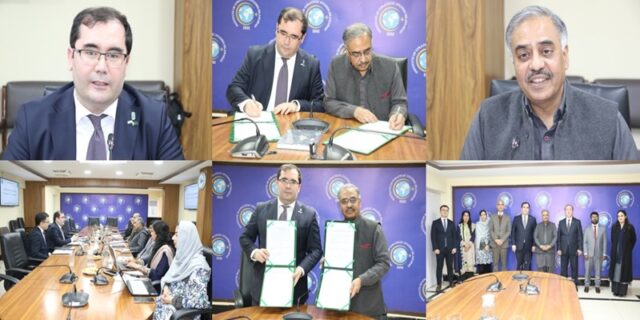
ISLAMABAD:(The News Mark) The Institute of Strategic Studies Islamabad (ISSI) hosted a delegation from Uzbekistan led by Mr. Eldor Sobirjonovich Tulyakov, Executive Director of the Development Strategy Center (DSC). Mr Rovshan Alimov, Deputy Ambassador of Uzbekistan in Pakistan, also attended the meeting. Director General ISSI Ambassador Sohail Mahmood, in his welcome remarks, highlighted Pakistan’s ‘Vision Central Asia’ based on a comprehensive five-pronged framework that underpins Pakistan’s engagement with Central Asia — encompassing political and diplomatic engagement; trade and investment; energy and connectivity; security and defence; and people-to-people exchanges. He emphasized that Uzbekistan’s reform-driven openness and connectivity aspirations closely align with Pakistan’s own vision for regional integration. Noting the steady expansion of bilateral cooperation in trade, transport, and energy connectivity, he cited tangible progress under the Pakistan–Uzbekistan Strategic Partnership, Transit Trade Agreement, advancements toward regional connectivity through the Trans-Afghan Railway, and the growing momentum in business-to-business exchanges as encouraging indicators of deeper integration. He further underscored that the enduring cultural, religious, and spiritual affinities between Pakistan and Uzbekistan provide a strong civilizational foundation for strengthening historical linkages. In this context, he observed that the year 2026 will hold special significance for both countries, marking the 500th anniversary of the establishment of the Mughal Empire in the subcontinent by Zahir-ud-Din Babur, a native of Uzbekistan’s Ferghana Valley. Ambassador Sohail Mahmood also briefed the delegation on ISSI’s mission, vision, and ongoing activities and stressed the importance of expanded think-tank and academic exchanges between Pakistan and Uzbekistan. Executive Director Tulyakov, in his remarks, acknowledged the deep bonds of history, faith, culture, and shared traditions between Pakistan and Uzbekistan, while highlighting the steadily expanding scope of bilateral cooperation. He lauded the strategic partnership between the two countries as a vital foundation for further elevating the relationship to new heights and appreciated Pakistan’s generous offer of access to its seaports as a significant facilitative step for enhancing Uzbekistan’s trade connectivity. While outlining the contours of people-centric development currently underway in Uzbekistan, he proposed further broadening of the ambit of cooperation between the two countries by focusing on improved air connectivity, expanded academic and scholarly exchanges, and the promotion of tourism. The talks were followed by the signing of a Memorandum of Understanding between ISSI and DSC aimed at fostering joint research initiatives, expert exchanges, collaborative publications, and sustained academic engagement.
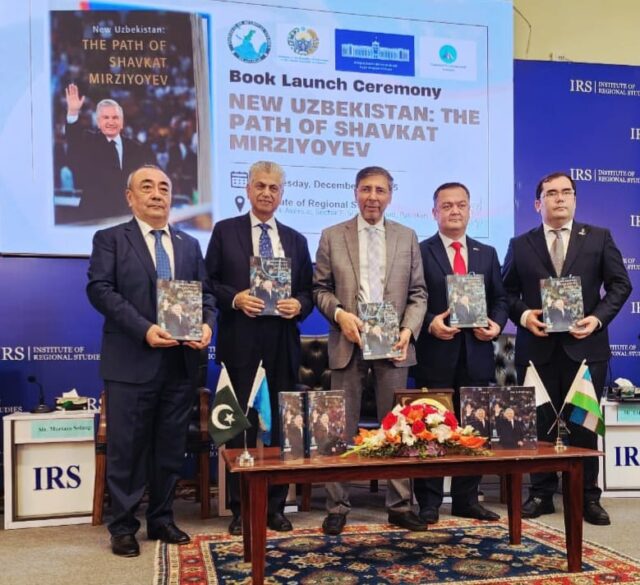
ISLAMABAD:(The News Mark) The Institute of Regional Studies (IRS), Islamabad, in collaboration with the Embassy of Uzbekistan, hosted a book launch ceremony for New Uzbekistan: The Path of Shavkat Mirziyoyev, bringing together diplomats, policymakers, scholars, and members of civil society. The event underscored Uzbekistan’s reform-driven transformation under President Shavkat Mirziyoyev and highlighted the deepening partnership between Pakistan and Uzbekistan. Ambassador Jauhar Saleem President IRS termed the book an intellectually rich and well-articulated account of Uzbekistan’s reform trajectory. He described the launch as a meaningful diplomatic and intellectual moment between two brotherly nations, bound by shared faith, history, culture, and civilizational ties. Highlighting Uzbekistan’s emergence as a regional hub since independence, he noted that the book goes beyond political narrative to present a profound reflection on leadership anchored in service to the people. Ambassador of Uzbekistan to Pakistan, Ambassador Alisher Tukhtaev, stated that Uzbekistan has entered a new era of growth marked by comprehensive reforms across governance, economy, science, and development. He noted that President Shavkat Mirziyoyev’s leadership has renewed public confidence in the country’s future, reflected in tangible economic gains, including an increase in GDP from USD 115 billion to USD 140 billion and foreign exchange reserves from USD 48 billion to USD 59 billion. Highlighting bilateral relations, Ambassador Tukhtaev described Pakistan and Uzbekistan as genuine partners bound by a long-term cooperation framework and mutual trust. He noted positive developments such as visa facilitation for Pakistani nationals through e-visa regimes, expanded direct flight connectivity between Tashkent and Islamabad and Lahore, with Karachi to be added next year, and growing trade volumes expected to rise from USD 404 million in 2024 to USD 450 million this year. Mr. Hassan Irmatov, Member of the Senate Committee of Uzbekistan, described the book as a leadership-oriented and analytical work that provides insights into contemporary governance and state transformation. Recalling the book’s earlier launches in the United States and at the United Nations Headquarters, attended by senior lawmakers, UN officials, and civil society representatives, he termed the Islamabad launch an important milestone in the book’s growing international outreach and a reflection of strengthening Pak–Uzbek relations. Mr. Eldor Tulyakov, Executive Director of the Development Strategy Center, elaborated on the profound transformation of Uzbekistan’s public administration over the past eight years. He emphasized that governance reforms have redefined the relationship between the state and citizens, placing human dignity at the center of policymaking. Transparency, participatory budgeting, institutionalized accountability, and service-oriented governance were highlighted as key pillars of reform. Spokesperson to President of Pakistan and former Information Minister, Mr. Murtaza Solangi, emphasized the deep cultural, historical, and geographical affinities between Pakistan and Uzbekistan. He noted that the two countries are connected by shared heritage, linguistic similarities, and close physical proximity, with vast untapped potential for cooperation in education, agriculture, technology, culture, and trade. He described Uzbekistan’s reform momentum as a “third renaissance” rooted in history, driven by openness, innovation, and a youthful demographic, stressing that enhanced regional connectivity with Central Asia is both timely and necessary. The event was well attended by senior diplomats, government officials, scholars, journalists, and students.
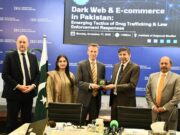
ISLAMABAD:(The News Mark) Participants of a roundtable discussion emphasized the need for effective implementation of national security policies and developing a sustained narrative against terrorist violence. They were speaking at a roundtable discussion on the evolving counterterrorism response of Pakistan and the challenges of cross-border terrorism organized by the Institute of Regional Studies (IRS) in the backdrop of the 11th anniversary of the terrorist attack on the Army Public School (APS) in Peshawar in December 2014. President IRS Ambassador Jauhar Saleem termed the 2014 APS tragedy a defining moment in Pakistan’s history which paved the way for formulation of the National Action Plan (NAP) with a political consensus. He called for countering the terrorists’ propaganda through a sustained counter-terrorism narrative. Former National Coordinator NACTA Mr Ihsan Ghani Khan highlighted the gaps in implementation of various good policy documents, including NAP. He maintained that tactical counterterrorism had a limited scope and needed to be bolstered by strategic counterterrorism that included well-thought-out policymaking and effective policy implementation. He added that since terrorism was a crime, the law enforcement mechanisms needed to be strengthened through the revamping of the criminal justice system which was also the last point in NAP. Pakistan’s former Special Representative for Afghanistan Ambassador Asif Ali Durrani also called for adopting a unified national narrative against terrorism. He urged the strengthening of the police force as first responders in countering terrorism and called for better interagency coordination among various government agencies and departments dealing with counterterrorism.
The Founder and Editor of The Khorasan Diary Mr Iftikhar Firdous said that even though APS was a tragedy in scale and scope, Pakistani policymakers needed to take even attacks targeting the school buildings and not the schoolchildren seriously because in doing that the terrorists were targeting symbols of education in the country. He called for better governance in the merged districts of Khyber Pakhtunkhwa to counter terrorism in those areas. The Executive Director of the Centre for Law and Security (CLAS) Mr Rehman Azhar said that Pak-Afghan border has certain unique characteristics that need to be considered when devising border security strategies. He also called for implementation of NAP and an effective counter-narrative strategy against terrorism, especially in the two provinces most affected by it. In addition, he also called for seriously addressing the terror and crime nexus in the country. The Lead of the Afghanistan Program at IRS Mr Aarish U. Khan said that the coming into power of the Taliban government in Afghanistan had necessitated a fresh look at the drivers of terrorism in Pakistan’s bordering areas with Afghanistan.
Islamabad, (The News Mark) The Institute of Strategic Studies Islamabad (ISSI) hosted Bilateral Dialogue with China’s premier think-tank, the Shanghai Institutes for International Studies (SIIS). The thematic focus of the Dialogue was “Strengthening Think Tank and Academic Exchanges Between China and Pakistan and Deepening the All-Weather Strategic Cooperative Partnership.” The Dialogue was attended by a high-level Chinese delegation comprising Prof. Chen Dongxiao, President, SIIS; Prof. Liu Zongyi, Senior Research Fellow and Director, Centre for South Asia Studies, SIIS; Dr. Tan Chenyi; and Dr. Zhang Xiaoyin, Research Fellows at SIIS, along with Mr. Shi Yuanqiang, Deputy Head of Mission, Chinese Embassy in Islamabad, while the speakers from Pakistani side included Ambassador Masood Khalid, Ambassador Zamir Akram, and Ambassador Asif Durrani, reflecting the depth and diversity of Pakistan’s scholarly and policy engagement in advancing China–Pakistan cooperation. Mr. Ishtiak Akil, DG(China) at the Foreign Office, also joined. The meeting focused on deliberations over recent developments in China–Pakistan relations, the evolving U.S. global engagement, regional dynamics, and developments vis-a-vis Afghanistan. In the opening remarks, Director General ISSI Ambassador Sohail Mahmood highlighted the enduring strength of the all-weather Pakistan–China strategic cooperative partnership, describing it as a cornerstone of Pakistan’s foreign policy and a stabilizing force for regional peace and shared prosperity. He underscored the deep strategic convergence between the two countries, particularly through CPEC, the Belt and Road Initiative, and support for China’s Global Development, Security, Civilisation, and Governance Initiatives. He emphasized that Pakistan’s close partnership with China complements its broader foreign policy of constructive engagement, inclusive regionalism, and support for a fair, equitable and cooperative multipolar world order. Ambassador Sohail Mahmood reaffirmed Pakistan’s commitment to peaceful coexistence, dialogue, and regional stability, while safeguarding its sovereignty and core national interests. He expressed confidence that enhanced think-tank collaboration between ISSI and SIIS would generate valuable insights to further strengthen Pakistan-China relations as both countries approach the 75th anniversary of diplomatic ties. Prof. Chen Dongxiao in his remarks said that the Pakistan–China strategic partnership has become even more vital amid profound global change and growing challenges to international order. He reaffirmed China’s strong interest in peace, stability, and development in South Asia, describing Pakistan as a trusted strategic partner. He highlighted the importance of deepening people-to-people, academic, and think-tank cooperation as a key pillar of bilateral relations. Prof. Chen expressed confidence that closer collaboration between SIIS and ISSI would make a positive contribution to regional stability and a more cooperative global order. Earlier, Dr. Talat Shabbir, Director, CPSC, delivered introductory remarks and moderated the working sessions. He highlighted the value of the ISSI–SIIS academic partnership in strengthening long-term intellectual cooperation. The Dialogue concluded with closing remarks and a vote of thanks by Ambassador Khalid Mahmood, Chairman, Board of Governors, ISSI, who appreciated the SIIS delegation’s valuable contributions and expressed confidence that sustained think-tank engagement would further strengthen Pakistan–China ties and promote shared goals of peace, cooperation, and regional stability.
ISLAMABAD :(The News Mark) The Institute of Regional Studies (IRS) convened the inaugural post-COP30 seminar to examine the outcomes of the UN climate conference held in Belém, Brazil, and its implications for Pakistan and other climate-vulnerable countries. Ambassador Jauhar Saleem opened the discussion by highlighting Pakistan’s disproportionate exposure to climate risks despite contributing less than 1% to global greenhouse gas emissions. He spoke about shrinking glaciers, increased water scarcity, deforestation, and worsening air pollution. He noted that cities like Lahore now rank among the most polluted globally. He also emphasized that fossil fuel consumption continues to dominate global energy use, while non-fossil sources remain far lower. While acknowledging Pakistan’s progress in solar energy, especially micro-solar initiatives, he stressed that resilience alone is insufficient without measured finance and implementation.
Ms. Zainab Naeem, Associate Research Fellow, SDPI, described COP as an important diplomatic space shaped as much by politics as by science. She highlighted discussions on transitioning away from fossil fuels, deforestation, and mitigating black carbon, a short-lived but highly dangerous pollutant from biomass and crop residue burning.Hamza Haroon, Regional Director of South Asia for Climate Vulnerable Forum (CVF-V20) focused on climate finance and adaptation and highlighted the mismatch between climate losses and available funding. He noted that while new financing windows offer USD $150 to 250 million, these amounts are inadequate compared to losses from climate disasters worth tens of billions. Tahanyat Satti, negotiator at UNFCCC, stressed the importance of continuity in negotiations and warned that frequent changes in negotiators weaken developing countries’ positions.
The event was moderated by Talha Tufail Bhatti, ARO Climate Governance, Policy and Food Security Program. He highlighted that post-COP discussions are critical to connect global climate commitments with local realities.
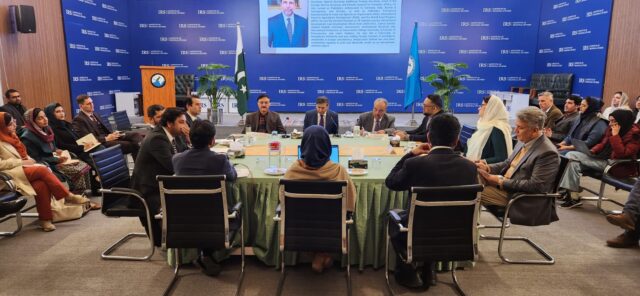
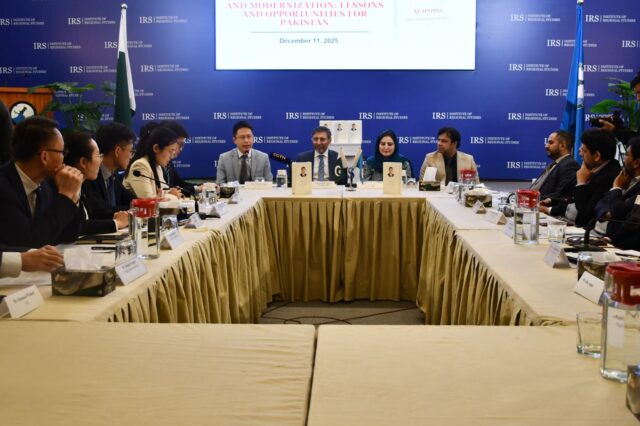
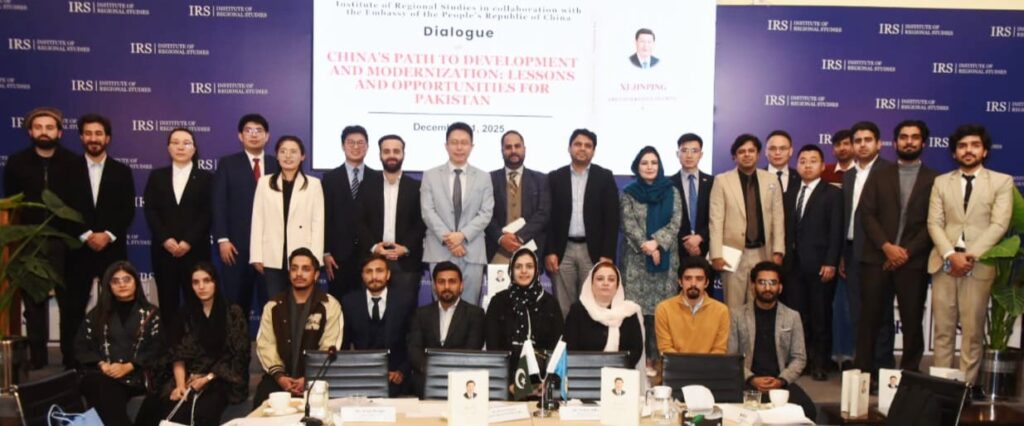
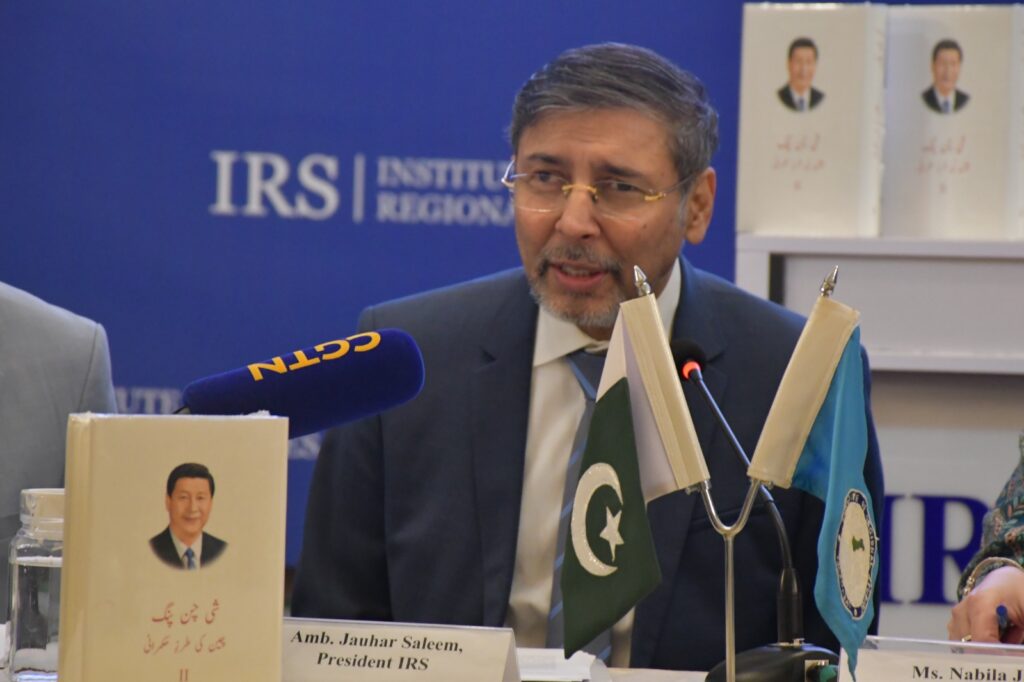
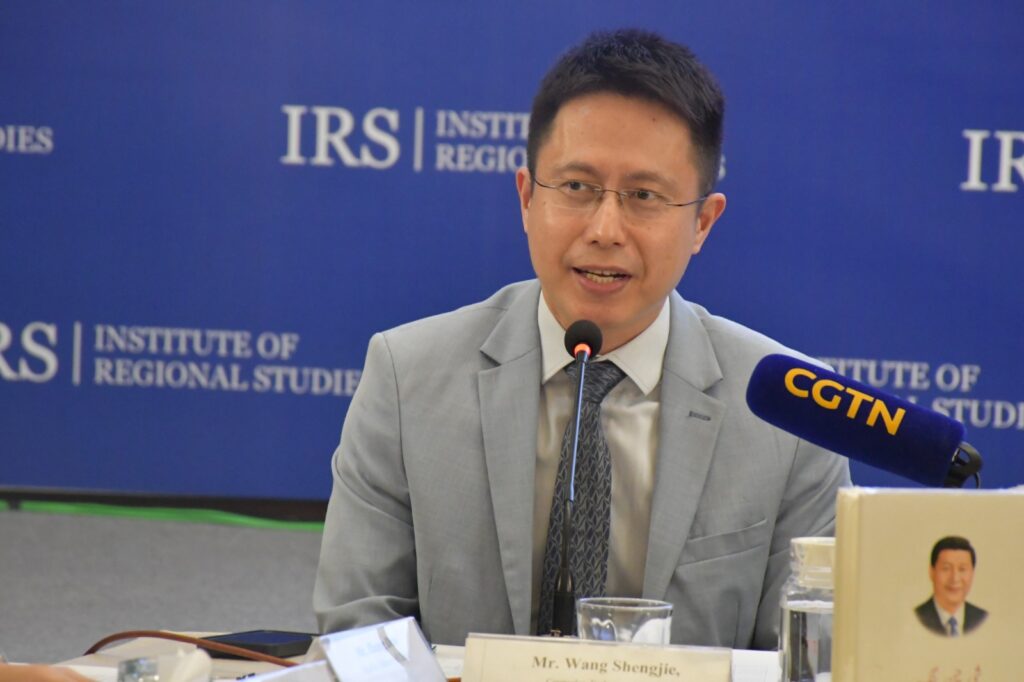
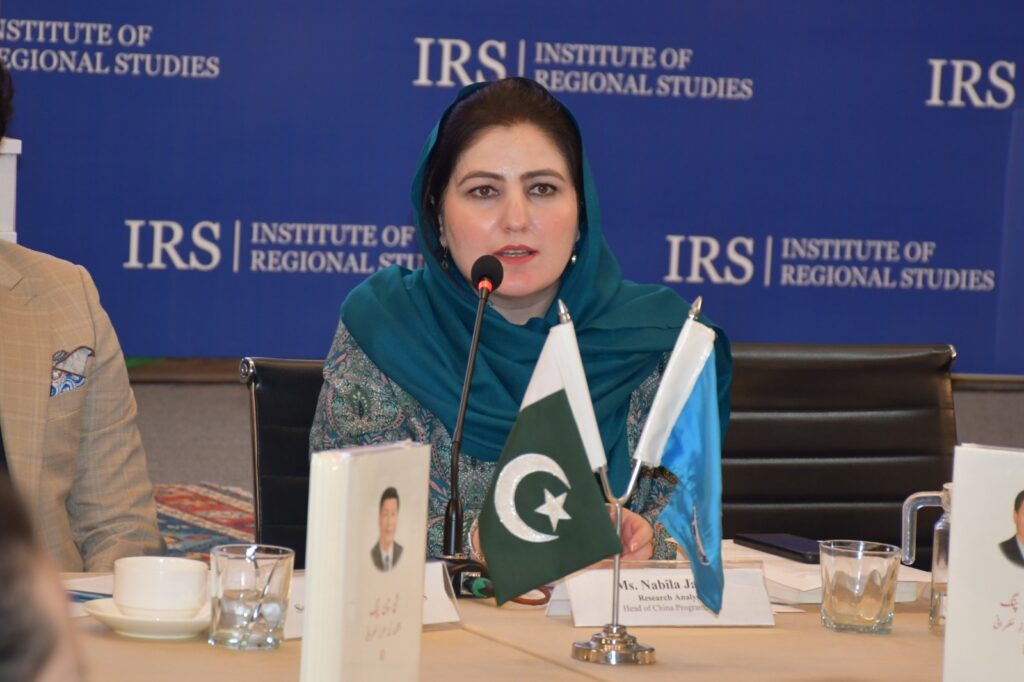
ISLAMABAD :The Institute of Regional Studies (IRS), in collaboration with the Embassy of the People’s Republic of China, hosted a dialogue on “China’s Path to Development and Modernization: Lessons and Opportunities for Pakistan.”
The event featured young diplomats from the Embassy of China, led by Mr. Wang Shengjie, Counselor and including Mr. Zhang Duo, Attaché; Mr. Yang Taofei, Attaché; Ms. Wang Yiqiu, Third Secretary; Mr. Li Zhen, Third Secretary; Mr. Zhang Datuo, Second Secretary; Ms. Jiang Lezan, Third Secretary; and Mr. Zhang Pengfei, Attaché. Other panelists included Dr. Usman Chohan, Mr. Zeeshan Ahmed, Dr. Furqan Rao, Dr. Mehmood Hassan, Mr. Tahir Dhindsa, Barrister Zopash Khan, Mr. Assadullah Khan, young and emerging scholars and influencers who exchanged views with the delegates, aimed at deepening understanding on the development, governance of China and exploring opportunities in China’s modernization drive 2035; as well as the targets to be achieved with another very effective Five-Year Plan 2026-2030 focused on high-quality development, self-reliance in technology, boosting of domestic consumption and opening wider for global business and exchanges.
Ambassador Jauhar Saleem, President IRS, delivered the opening remarks, highlighting China’s remarkable achievements in poverty alleviation, economic growth, and modernization. He noted that China’s national strategies, particularly its Five-Year Plans, provide valuable lessons for developing countries such as Pakistan seeking sustainable and equitable development.
A central feature of the dialogue was the display and discussion of the Fifth Volume of “Xi Jinping: The Governance of China.” Published in July 2025, the volume compiles 91 speeches and writings of President Xi Jinping from May 2022 to December 2024, along with photographs documenting key moments of governance. Divided into 18 thematic sections, the book presents China’s defining features of modernization, its practical pathways, and achievements under the leadership of the Communist Party of China (CPC). The earlier series, already translated into more than 40 languages and distributed in over 180 countries, continues to shape global understanding of China’s governance philosophy. Since China’s development has evolved, so has its role in the world, and the new editions of President Xi’s work provide the guidance, ideas, and inspiration accordingly.The delegation shared perspectives on China’s people-centric diplomacy, people-centered governance, the four initiatives, the Belt and Road Initiative, and reforms in the Communist Party of China (CPC). They emphasized that China’s development model is rooted in inclusivity, self-reform, and cultural harmony, while initiatives such as CPEC continue to serve as vital pillars of Pakistan-China friendship.
Notable Pakistani experts, scholars, and educationists contributed their views on governance, policymaking, and business opportunities. They underscored the importance of consistency in national policies, competence-based education, and people-centric approaches to development. The dialogue also explored how Pakistan could benefit from China’s experience in long-term planning, inclusive policymaking, and technological investment.
The session concluded with a reaffirmation of the enduring Pakistan-China partnership and the shared commitment to modernization, cultural exchange, and mutual progress.
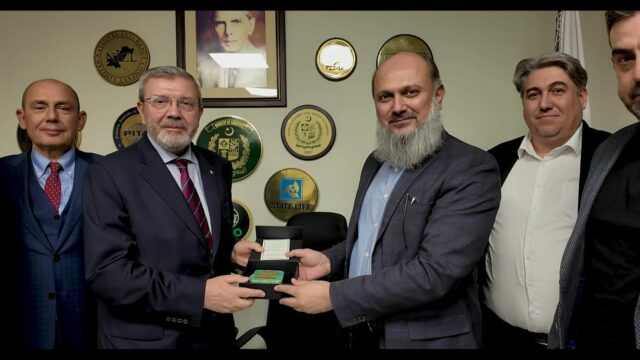
ISLAMABAD : (The News Mark) A high-level delegation from the Republic of Türkiye, led by Ahmet Khan, Group CEO and Honorary Investment Counselor of Pakistan in Türkiye, called on Federal Minister for Commerce, Jam Kamal Khan.
They conveyed strong interest in pursuing joint ventures, technology transfer, and establishing manufacturing capabilities in Pakistan.
The Turkish side briefed the Minister on Türkiye’s rapidly advancing aviation and defence industries.
They also noted existing international collaborations and expressed willingness to expand such partnerships through Pakistan.
Jam Kamal Khan welcomed the delegation and reaffirmed Pakistan’s commitment to deepening industrial and economic ties with Türkiye.
He highlighted the long-standing people-to-people goodwill between the two nations and emphasized the significant potential for cooperation in aerospace, defence production, minerals development, and dual-use manufacturing, supported by Pakistan’s engineering base and rich critical mineral resources.
The Minister encouraged Turkish companies to view Pakistan as a strategic production and export partner for regional and global markets, including ASEAN, Africa, the Gulf, and South Asia.
He underscored the value of exploring trilateral and multilateral partnerships leveraging the strengths of both countries.
He also briefed the delegation on Pakistan’s ongoing initiatives, such as the development of an expanded new Expo Centre in Karachi and increased coordination between the Ministry of Commerce, Ministry of Defence Production, and national technology institutions.
The Turkish delegation appreciated Pakistan’s strategic vision and expressed readiness to pursue long-term cooperation across aviation, defence manufacturing, engineering, and advanced materials.
They also showed interest in strengthening banking and trade facilitation mechanisms to support future collaboration.
The meeting concluded with both sides agreeing to advance sector-specific engagements, support B2B linkages, and explore investment-led industrial partnerships to boost bilateral trade and technological cooperation.