
17.7 C
Islamabad
Home Blog Page 4

The Embassy of Russia in Pakistan strongly condemns the terrorist attack in Quetta.

0

Islamabad : The Embassy of the Russian Federation in Islamabad strongly condemns the terrorists attack in Quetta The Embassy issued a statement earlier today and stated, We emphasize the need to combat terrorism in all its forms and manifestations, and we hope that those who organized and perpetrated this attack will be identified and brought to justice.

We express our condolences to the families and friends of the victims and wish all those injured a speedy recovery.

CM Sindh Lauds Ethiopian Airlines as Key Instrument of Look Africa & Engage Africa Policies.

0

Islamabad:​H.E. Dr. Jemal Beker Abdula, Special Envoy and Ambassador Extraordinary of the Federal Democratic Republic of Ethiopia (FDRE) to the Islamic Republic of Pakistan, called on H.E. Syed Murad Ali Shah, Chief Minister of Sindh, Pakistan at his office in Karachi on Tuesday.
​The two sides discussed the growing bilateral cooperation between the two countries across various sectors, including trade, investment, aviation, tourism, culture, and climate change. They also explored new areas for partnership, specifically in agriculture and agro-processing, education, and health, to further strengthen bilateral relations.
​The Ambassador commended the Chief Minister’s recent initiative to host a high-level Ethiopian delegation for a Green Dialogue at the Chief Minister Sindh House recently. This visit, he added, plays a crucial role in formalizing bilateral cooperation against climate change.

Ambassador Dr. Jemal Beker also briefed the Honorable Chief Minister on the preparations underway in Addis Ababa to host a large number of delegates for Pakistan’s Single Country Exhibition scheduled for October in Ethiopia.
He also praised the increasing connectivity between Pakistan and Africa facilitated by Ethiopian Airlines, underscoring its key role in Pakistan’s Look Africa and Engage Africa policies.
​The Honorable Chief Minister called the Ethiopian Airlines as a game-changer for Pakistan-Africa relations, lauding the carrier as a key instrument of the Look Africa and Engage Africa policies.
The CM Sindh also appreciated the Ambassador’s effective role in strengthening the bilateral relations between the two countries.
​The Honorable Chief Minister vowed to further enhance bilateral cooperation to elevate the relationship to the high degree.
​Mr. Ibrahim Khalid Tawab, Honorary Consul of the FDR Ethiopia in Karachi, was also present during the meeting.

Together with like-minded countries, Russia does not intend to tolerate racist and neo-colonial approaches and will counter them at the United Nations and elsewhere. Amb Albert P. Khorev

0

Islamabad :In May 2025, President Vladimir Putin initiated the resumption of direct RussiaUkraine negotiations, which the Ukrainian side had interrupted in April 2022. Three rounds of negotiations produced positive results regarding prisoner exchanges but revealed Kiev’s unwillingness to discuss the technical details and verification procedures of a potential ceasefire. This is no coincidence, but rather a continuation of the Kiev regime’s and its European sponsors’ deliberate policy to undermine initiatives aimed at resolving the conflict. Since March, Ukrainians have had three opportunities to demonstrate their willingness to negotiate and their commitment to peace. In March, Kiev ignored the opportunity to cease strikes on energy infrastructure for 30 days. Then, during the Easter truce from April 19 to 21, Kiev repeatedly violated the ceasefire, doing so a total of 4,900 times. Finally, Kiev rejected President Vladimir Putin’s initiative to suspend hostilities from May 9 to 11 during the celebration of the 80th anniversary of the Victory in the Great Patriotic War. Nevertheless, Ukrainians and Europeans are insisting on an immediate ceasefire along the entire front line. This raises a logical question: How does Ukraine plan to observe a complete ceasefire when we have seen Kiev’s total unwillingness and reluctance to agree to a limited truce this year? The answer is obvious. Ukraine and its sponsors do not need the truce to move closer to a peaceful settlement of the conflict. Rather, they need it to regroup and rearm their army with the help of European military and financial aid, which has amounted to approximately $70.2 billion since the start of the special military operation.
Russia strongly opposes this option. We well remember what happened the last time
the Ukrainians and Europeans were entrusted with the issue of peace in Donbass.
The 2015 Minsk agreements, which were approved by the UN Security Council and
guaranteed by Germany and France, were intended to resolve the Ukrainian crisis
and stop Kiev’s offensive against its own people. This offensive began in 2014 with
the aim of punishing those who refused to recognize the unconstitutional coup
d’état. However, these agreements turned out to be yet another political ploy. Later,
it was revealed that their purpose was to give Kiev time to rearm and launch a new
punitive operation against its own people.
Another Ukrainian obsession is the prospect of a summit between President Putin
and Vladimir Zelensky. By insisting on organizing this summit, Zelensky, whose
presidential mandate expired in May 2024, seeks to legitimize himself by meeting
with one of the world’s most renowned leaders. The former comedian and current
head of the Kiev regime follows his old habit of making a show out of everything.
Russia does not want to participate in comedic performances. We are interested in
having a professional discussion about the specifics of lasting peace.
Lasting peace in Ukraine requires addressing the root causes of the conflict. This
includes abandoning Kiev’s neo-Nazi policies, ending the oppression of the Russian-speaking population and Russian language in Ukraine, halting Zelensky’s crusade
against the Orthodox Church, preventing NATO from expanding eastward, and keeping NATO troops out of Ukraine. Once these issues are addressed by experts, a
meeting between Presidents Putin and Zelensky will be meaningful. The summit
must conclude the peace process, not initiate it.
Russia is making real progress toward achieving peace in Ukraine. Although the
direct Russia-Ukraine negotiations have seen limited progress, certain achievements
have been made.
First, since May 2025, over 1,000 prisoners of war from both sides have been
exchanged.3
Second, the remains of 6,060 Ukrainian soldiers have been transferred to Ukraine
for burial. Russia received 78 bodies.
Third, the myth of “Russia’s mass abduction of Ukrainian children” has been
debunked. Russian negotiators received a list of 339 children suspected of having
been evacuated to Russia from the war zone. Previously, Ukrainian propaganda
claimed that Russia had stolen 19 thousand Ukrainian children.
Fourth, we agreed to continue efforts to establish a joint working group that would
produce a step-by-step plan for achieving a ceasefire and verifying compliance.
Amidst huge losses and retreats across the entire line of contact, the Kiev
leadership has resorted to organizing terrorist acts in an attempt to intimidate
Russia. The most notable of these were the explosions on railway bridges in the
Bryansk and Kursk regions on May 31 and June 1. These attacks claimed seven
civilian lives and injured 122 others.
The despicable and cowardly actions of the Kiev regime do not affect the combat
capability of the Russian Armed Forces, who continue to advance steadily in
Donbass. However, these strikes on civilian infrastructure raise the question once
again of whether negotiating with terrorists is necessary.
Recent legislative initiatives in Kiev are also not conducive to negotiations. The
recent act “On the Foundations of the State Policy on National Memory of the
Ukrainian People,” adopted by the Ukrainian parliament on August 21, further
entrenches Russophobic sentiments in the legal framework of the Ukrainian state.
The act prohibits the public display of Soviet-era symbols and forbids the use of the
term “Great Patriotic War,” which is commonly used in former Soviet states to
refer to World War II in Europe. The act also glorifies twentieth-century insurgents
and Nazi collaborators, calling them “freedom fighters.” This legislation violates
Ukraine’s constitution, which guarantees freedom of thought and speech (Article4
34), as well as the 1965 International Convention on the Elimination of All Forms of
Racial Discrimination and the 1950 European Convention on Human Rights.
Those who closely follow the domestic political situation in Ukraine are hardly
surprised by such violations of legal norms. Since 2022, the Kiev regime has
undergone a political transformation. The conditions it created under the pretext
of introducing martial law have allowed it to establish a harsh, authoritarian
system of government characterized by an absolute monopoly on power,
extrajudicial killings, total censorship, state propaganda, the de facto elimination
of independent media, and the destruction of the political opposition under the
pretext of actively searching for fictitious Russian spies and saboteurs.
On February 24, 2022, by signing the decree “On the Imposition of Martial Law in
Ukraine,” Zelensky effectively deprived Ukrainian citizens of their rights and
freedoms. The decree restricts the inviolability of the home, the confidentiality of
telephone conversations and other correspondence, the right to non-interference
in personal and family life, the freedom to choose one’s place of residence, and the
freedom to think, speak, and express one’s views and beliefs.
Today, Ukrainian citizens are effectively deprived of most of the rights and
freedoms that exist around the world. During mobilization, Ukrainian authorities
use the most unlawful and inhumane methods without hesitation. To avoid it,
Ukrainian citizens try to leave the country or otherwise avoid joining the Armed
Forces of Ukraine by using corrupt schemes.
The situation regarding the preservation of historical memory in Ukraine remains
dire. Kiev is actively campaigning to destroy all Soviet, and therefore its own,
memorial heritage in honor of those who fought against Nazism, while at the same
time intensifying efforts to falsify the history of World War II in order to justify
Nazism. All of this is being done to stir up Russophobia.5
It is important to note that the vast majority of countries worldwide share Russia’s
stance agains the glorification of Nazism and the justification of racism. In 2024,
119 countries, including Pakistan, supported the relevant Russian UN resolution.
Fifty-three delegations opposed it, including the United Kingdom, Canada, Ukraine,
and EU member states.
Together with like-minded countries, Russia does not intend to tolerate racist and
neo-colonial approaches and will counter them at the United Nations and elsewhere.
At the same time, we regret to note that the United Nations leadership is strongly
influenced by Western countries, resulting in biased approaches and double
standards.
Since the 2014 coup in Kiev, the UN Secretariat, led by António Guterres, has
consistently aligned itself with the Westerners’ biased anti-Russian stance in the
context of the Ukrainian crisis, citing eight resolutions of the so-called “emergency
special session” of the General Assembly. Meanwhile, 30 to 40 percent of UN
member states did not vote in favor of these resolutions.
Despite the global majority’s position on the situation in the Middle East, the
Secretariat leadership refrains from taking active steps or publicly criticizing Israel.
They also avoid attacks against the US regarding its decisions to recognize Israeli
sovereignty over the Syrian Golan Heights (2019) and East Jerusalem (2017), as
well as the transfer of the US embassy there. At most, UN officials routinely call for
a ceasefire in Gaza, the release of hostages, and the resumption of humanitarian aid
to the region, but they do not emphasize the numerous General Assembly and
Security Council resolutions in favor of a two-state solution.
Thus, it can be concluded that the political leadership of the Secretariat and its staff
are increasingly deviating from their assigned tasks of acting as guardians of the
principles of the UN Charter in their entirety, comprehensiveness, and
interconnection by consistently violating the principle of impartiality enshrined in
Article 100 of the Charter and selectively applying its provisions.6
In my article, “Alaska and Beyond,” published in the Pakistani press in late August, I provided a detailed assessment of Russia’s position on the outcome of the talks between the Russian and U.S. Presidents in Anchorage, Alaska. Despite its decisive advantage on the battlefield, Russia has once again demonstrated its commitment to achieving a diplomatic resolution to the conflict. The leaders of Russia and the United States have shown their willingness to compromise for the sake of lasting peace. During the Russian-American negotiations, the U.S. administration clearly demonstrated its understanding of the need to address the root causes of the conflict. President Trump is the only Western leader who has publicly acknowledged that Ukraine’s involvement in NATO contributed to this conflict.
Additionally, Americans demonstrated an understanding that those who voted in referendums on joining and returning to Russia in protest against the oppressive Nazi regime will never again live under the yoke of the current Kiev authorities. This approach is reflected in initiatives promoted by the Trump administration. However, Zelensky and Co. completely rejected the mutual understanding achieved in Anchorage and the outlines of a possible peace process in Ukraine. We see Ukraine and European countries doing everything they can to sabotage a peaceful resolution to the conflict. New financing and support schemes for Ukraine are being created that are designed to prolong the conflict. These include legally invalid structures such as the “Register of Damage to Ukraine,” NATO Security Assistance and Training for Ukraine (NSATU), and the NATO-Ukraine Joint Analysis, Training and Education Center (JATEC). At the same time, the Presidents of France and Germany are still insisting on deploying their armed forces in Ukraine as part of security guarantees. EU countries must understand that the presence of Western troops in Ukraine, whether under the NATO flag or as individual nations, is unacceptable and will not resolve the conflict

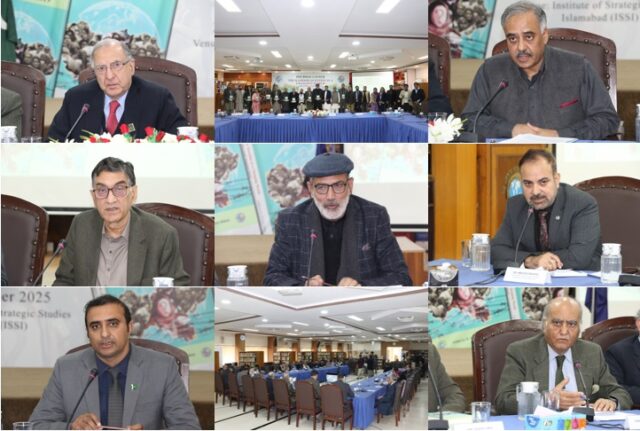
ISSI hosts Seminar on “SCO’s ‘China Year 2025’: Upholding the ‘Shanghai Spirit’”

0

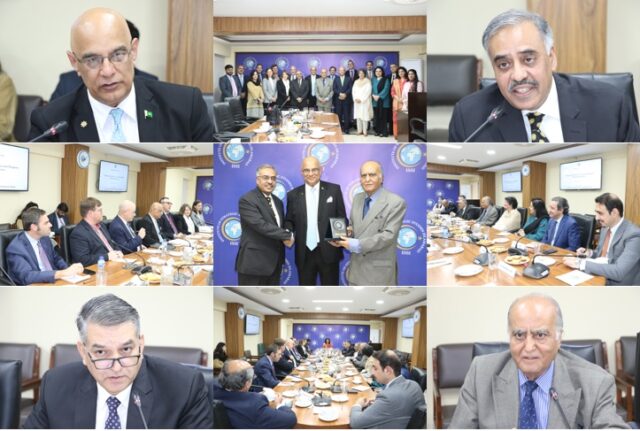
The China-Pakistan Study Centre (CPSC) at the Institute of Strategic Studies Islamabad (ISSI) hosted a seminar on August 22, 2025, titled “SCO’s ‘China Year 2025’: Upholding the ‘Shanghai Spirit’.” Ambassador Farhat Ayesha, Pakistan’s National Coordinator for SCO, delivered the keynote address, while Ambassador Khalil Hashmi, Pakistan’s Ambassador to China, was the Guest of Honor. Other speakers included Ambassador Babar Amin, Pakistan’s former National Coordinator for SCO, Dr. MA Bin from Fudan University China, Dr. Ma Zheng from Sun Yat-sen University China, and Dr. Hassan Daud Butt from Bahria University.
In his welcome remarks, Ambassador Sohail Mahmood, Director General ISSI, underscored the SCO’s remarkable evolution into one of the world’s most comprehensive and dynamic multilateral platforms, calling it a compelling example of multilateralism in action. He emphasized that in an era of intensifying geopolitical tensions, the ‘Shanghai Spirit’ offers an alternative vision of cooperation — dialogue rather than dominance, consensus rather than confrontation, and collective prosperity rather than unilateral gains. He noted that with nearly half the world’s population and a quarter of global GDP, the SCO’s global salience is firmly established. Highlighting China’s Presidency in 2024–2025, he pointed to Foreign Minister Wang Yi’s five-point roadmap as a forward-looking plan rooted in the Shanghai Spirit, encompassing solidarity, collective security, win-win economic cooperation, and equitable global governance. Hailing China’s proactive Presidency and innovative approach, Ambassador Sohail Mahmood expressed the confidence that the upcoming 25th SCO Summit in Tianjin, China, on August 31-September 1 would adopt a long-term development strategy and other documents, charting the SCO’s course for the next decade and reinforcing its role in promoting peace, stability, and prosperity across Eurasia.
In her keynote address, Ambassador Farhat Ayesha noted that SCO’s “China Year 2025” marked a defining moment in the organization’s trajectory. She praised China’s far-sighted approach and active role in constructive engagement, dialogue, and cooperation within the SCO framework. She stressed that China’s leadership has strengthened the SCO’s standing as a vital multilateral platform and expanded its scope towards new areas such as poverty reduction, climate resilience, digital economy, and connectivity. She underlined Pakistan’s strong commitment to the SCO since becoming a full member in 2017 and highlighted the deep alignment between Pakistan’s foreign policy objectives and the principles enshrined in the UN Charter, the SCO Charter, and international law.
Ambassador Babar Amin highlighted China’s instrumental role in facilitating Pakistan’s integration into the SCO and noted the upcoming Tianjin Summit as the largest-ever gathering of SCO members. He appreciated China’s efforts in advancing cooperation aligned with President Xi Jinping’s Global Development Initiative, covering poverty alleviation, food security, health, climate change, industrialization, digital economy, and connectivity.
Dr. MA Bin underlined that the SCO was entering a new era amidst heightened geopolitical competition, stressing the importance of strengthening security, economic cooperation, and people-to-people bonds, especially youth engagement. Dr. Ma Zheng emphasized the four pillars of SCO’s development — security, mutual development, neighborly relations, and fairness in international affairs — and lauded China’s central role in shaping the organization’s trajectory. Dr. Hassan Daud Butt noted the SCO’s resilience in a fragmenting global order and welcomed the Azerbaijan-Armenia peace pact as a step toward enhancing regional connectivity.
Guest of Honor, Ambassador Khalil Hashmi highlighted the SCO’s growing significance as a leading regional organization built on the values of mutual trust, equality, dialogue, and shared development embodied in the ‘Shanghai Spirit’. He noted that under President Xi Jinping’s leadership, the SCO had gained fresh momentum with an enhanced focus on cooperation, connectivity, digital transformation, and green development. Ambassador Hashmi emphasized Pakistan’s strong commitment to the SCO as a vital platform for countering terrorism and extremism, ensuring peace and security, and advancing sustainable development. He underlined the centrality of CPEC as not only a bilateral undertaking but also a bridge for wider SCO regional integration. Reaffirming the ‘iron brotherhood’ between Pakistan and China as the cornerstone of Pakistan’s foreign policy, he expressed confidence that the upcoming Tianjin Summit would renew collective commitments to regional peace, prosperity, and the ‘Shanghai Spirit.’
Earlier, in his introductory remarks, Dr. Talat Shabbir, Director CPSC, underscored the SCO’s enduring relevance in ensuring regional stability, fostering economic cooperation, and strengthening cultural linkages.
The seminar concluded with a vibrant interactive session. The event was attended by a large number of diplomats, practitioners, academics, think-tank experts, students, business community representatives, and members of the media.

Pakistan is not alone in its fight against climate change as Ethiopia firmly stands with its brothers and sisters from Pakistan.

0

PHA Hosts Ethio-Pakistan Green Dialogue in Lahore

Islamabad : An Ethiopia-Pakistan Green Dialogue was held at a local hotel in Lahore to promote green culture, innovation and technology in the global south for effectively fighting the climate change.
The “Ethiopia–Pakistan Green Dialogue: Lessons from Ethiopia’s Green Legacy” was jointly organized by the Ethiopian Embassy Islamabad and the Parks & Horticulture Authority Lahore, Government of the punjab.
The event was graced by Bilal Yasin, Minister of Punjab for Housing, Urban Development and Public Health Engineering as a Chief Guest, while Muddassir Riaz Malik, Secretary Forest, Wildlife & Fisheries Department, DG PHA Punjab Naheed Gul Baloch and Zaki Ijaz, Vice President of Federations of Pakistan Chamber of Commerce and Industry attended as the guests of honor.
A delegation from Ethiopia took part in the Dialogue which saw huge presence from Pakistan including government officials, diplomatic corps, climate experts, University professors, business community, academia, youth and civil society.
H.E. Dr. Jemal Beker Abdula, Special Envoy and Ambassador Extraordinary of the Federal Democratic Republic of Ethiopia, presided over the dialogue along with H.E. Mansoor Ahmad, Director General PHA.

Addressing the launching the ceremony of dialogue, the Ambassador briefed the participants about the importance of massive plantation through community mobilization to avert the adverse impacts of the climate change.
He said Pakistan needs to learn from Ethiopia’s Green Legacy Initiative of our Prime Minister H.E. Dr. Abiy Ahmed, whose leadership and commitment helped Ethiopia plant more than 41.2 seedlings that significantly enhancing green cover through forestation and reforestation and addressing food insecurity, soil erosion, poverty and unemployment.
The Ambassador said Pakistan is facing the severe climate changes despite being the least contribution to the carbon emissions. “Pakistan is not alone in its fight against climate change as Ethiopia firmly stands with its brothers and sisters from Pakistan.
He said the Government of Ethiopia has sent a high-level delegation to Pakistan to express solidarity and share our experiences with Pakistan to tackle the climate changes. “I would like to thank H.E. Maryam Nawaz Sharif, Chief Minister of Punjab, for providing us this opportunity to initiate the discussions on the Green Legacy Initiative in Punjab,” he added.
The DG PHA said the dialogue is the manifestation of the climate-friendly agenda of Chief Minister Punjab who is committed to modernize Punjab in sustainable manner.
He appreciated the Green Legacy Initiative and vowed to strengthen the two sides partnership in this regard.
FPCCI Vice President Zaki Aijaz lauded the initiative taken by the Ethiopian Embassy Islamabad and Government of Punjab to promote dialogue to address the issue of most pressing issues of our times—climate change.
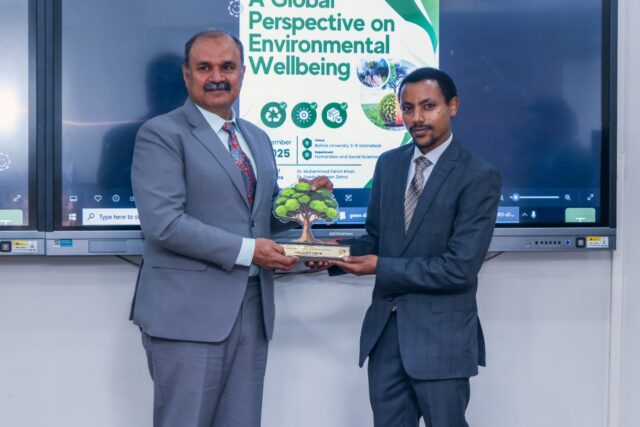
As part of the proceedings, Green Legacy Awards were presented, followed by a mass tree plantation ceremony, reflecting the shared commitment of Pakistan and Ethiopia towards a greener future.
A thought-provoking panel discussion on Green Legacy Initiatives brought together experts and policymakers who shared innovative strategies, policy frameworks, and community engagement models to promote long-term environmental sustainability.
The session concluded with a lively Q&A, where participants expressed strong support for further enhancing Pakistan–Ethiopia collaboration in climate resilience, ecological restoration, and sustainable development.

IRS Hosts Talk on ‘Contested Narratives in the Climate of Change: A Case Study of the Indus River Delta’

0

Islamabad: “Freshwater outflows to the sea are not a loss; they are critically essential for sustaining communities, fishing, agriculture, and marine ecosystems,” remarked by Dr. Hameed Jamali urging policymakers to move beyond technocratic solutions and recognize rivers as living systems
Dr. Hameed Jamali, Climate Expert working on policy, finance and water governance presented a talk on ‘Contested Narratives in the Climate of Change: A Case Study of the Indus River Delta’, hosted by the Climate Resilience Program at the Institute of Regional Studies. The session explored the competing narratives shaping water governance, climate adaptation, and local livelihoods in the Indus River Delta, which is the fifth largest delta in the world and home to 97% of Pakistan’s mangrove forests. Dr. Jamali highlighted that the Indus River Delta, once a thriving ecosystem, is now on the brink of collapse. Mangrove cover has declined from 600,000 hectares to nearly 100,000 hectares, seawater intrusion has advanced 80 kilometers inland, and over 80% of the delta is now salinized, causing large-scale displacement and economic losses estimated at $2 billion annually. He indicated that the climate change is often invoked as a major cause of the delta’s vulnerability, yet governance failures, poor water management, and unregulated development have played an equally critical role in worsening losses.

The talk examined how dominant narratives, such as framing water flowing to the sea as ‘wastage’, reliance on large dam projects, and climate change as an abstract driver, have overshadowed ecological and community realities. Dr. Jamali stressed the need for ecological water flows below Kotri Barrage, climate-resilient basin-level governance, and community-led water stewardship. He also called for replacing the outdated irrigation-centric model with Integrated Water Resource Management (IWRM) and reframing policies to integrate local ecological knowledge alongside scientific expertise.
Dr. Rizwan Naseer, Senior Research Fellow at IRS said that the Indus River Delta represents a critical ecological zone and a lifeline for millions, yet it faces severe degradation driven by climate variability, upstream water management practices, and socio-economic challenges. He noted that climate change has amplified these vulnerabilities, creating complex policy and governance dilemmas that demand urgent and evidence-based solutions.
Dr. Anjum Rasheed, Head, Climate Resilience Program concluded the session with a strong call for policy reforms that prioritize ecological sustainability, community participation, and resilience against future climate and governance challenges.

CDA Hosts Ethiopian Delegation to Launch ‘Plant Fraternity’ in Islamabad

0

Islamabad :The Capital Development Authority hosted a high-level delegation from Ethiopia at the Fatima Jinnah Park, F-9 Islamabad to plant seedlings of Ethio-Pakistan Fraternity to foster friendly and brotherly relations between the two countries.The launch of “Plant Fraternity” was a joint collaboration between the Ethiopian Embassy Islamabad, Capital Development Authority (CDA) and the Human Resource Development Network of Pakistan.A large number of youth took part in the planation ceremony which marked the launch of the “Plant Fraternity” initiative of the Government of Ethiopia, in Islamabad.

Addressing the launching ceremony, the Ambassador said Pakistan is facing severe climate changes despite being the least contributor to the carbon emissions.
He said the Government of Ethiopia has sent its delegation to Pakistan to support Pakistan’s fight against the climate change.“The “Plant Fraternity” initiative is a gift from our government under which we would like to share the successful experiences of the Green Legacy Programme of our Prime Minister H.E. Dr. Abiy Ahmed, with Pakistan,” the Ambassador remarked.Under the Green Legacy Initiative, the Ambassador said Ethiopia has planted more than 41.2 billion seedlings in last six years that has addressed land degradation, deforestation, food insecurity, unemployment and poverty.
H.E. Awais Tarar, Director General Environment of CDA, lauded the “Plant Fraternity” initiative taken by the Ethiopian Embassy for strengthening bilateral relations between the two countries.He said the CDA is making concerted efforts to enhance afforestation and forestation in Islamabad by launching plantation campaigns with massive community engagement.

Ms. Robeela Bangash, Chief Executive Officer HRDN, stressed on the critical role of the youth in climate actions, urging them to fully participate in plantation drives, essential for averting adverse impacts of climate changes.

Trango Towers Scaled by Indonesia’s Climbers to mark 80th Independence Day

0
sdr_vivi

Islamabad : Indonesia High Commission Islamabad held press briefing to highlight the Indonesian Climbers team to Scale Trango Towers successfully.
A six-member Indonesian mountaineering team has successfully scaled the dangerous vertical Trango Towers in Skardu as part of Indonesia’s 80th Independence Day celebrations, becoming the first Asian climbers to achieve this feat.

The announcement was made by Indonesia’s Chargé d’Affaires Rahmat Hendar Yarta during a press conference at the Indonesian Embassy, where he highlighted that the achievement symbolizes people-to-people connectivity between Pakistan and Indonesia. “Conquering the Towers symbolizes the strong bilateral relationship.”Rahmat Hendar highlighted the potential for mutual exchange in adventure sports, noting that Indonesia excels in sport climbing while Pakistan offers world-class mountaineering experiences.Indonesia’s Chargé d’Affaires pointed out that Pakistan is the largest recipient of Indonesian educational scholarships, and in 2023, over 14,261 Pakistani tourists were granted visas to Indonesia.

The Indonesian team is the first from Asia to summit the 6,251-foot vertical rock complex.The Indonesian climbers, led by mountaineer Faredin Simbareng, faced severe challenges during their expedition, with some members sustaining injuries but continuing with determination.They expressed their intent to return to Pakistan next year for another mountaineering mission.The successful ascent of the 6,251-metre Trango Towers is being celebrated as a milestone in strengthening cultural and people-to-people relations between the two nations.

Greater cooperation on gender equality between Pakistan and Nepal urged

0

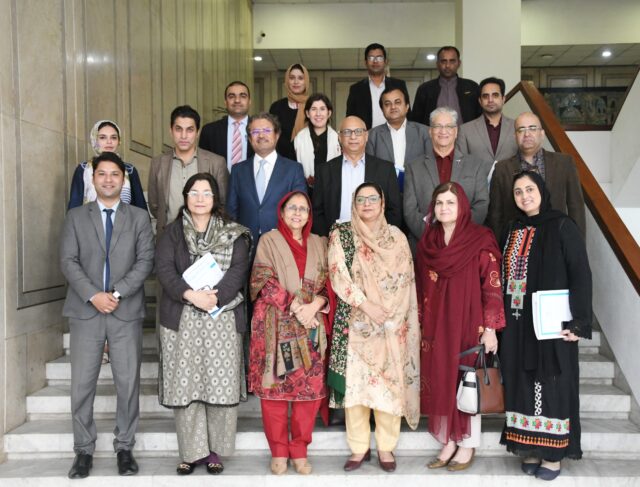
Islamabad:During a visit by a Nepal’s Women Parliamentarians’ delegation to the Institute of Regional Studies (IRS) Islamabad, President Amb. Jauhar Saleem underscored the importance of enhanced cooperation between Pakistan and Nepal on gender development. He noted the cordial relationship between the two countries and advocated for its translation into tangible cooperation across various sectors of mutual interest. He commended the Parliamentarians’ dedication to addressing legislative and governance gaps that impede gender development. Amb. Saleem highlighted gender development as a key area for collaboration, alongside climate change, and educational and cultural exchanges between the two countries. He proposed allocating the existing 50 percent scholarship to Nepali students specifically for female, anticipating a significant boost to women’s empowerment in the region.
Ms. Nagina Yadav, delegation head and leading Nepali Congress Party figure, outlined Nepal’s gender development status and the delegation’s commitment to addressing gender challenges. She conveyed the delegation’s strong desire for concrete collaboration with Pakistan, recognizing Pakistan’s effective women empowerment initiatives.
Ms. Puja Chaudhary, of the Janata Samajbadi Party Nepal, emphasized the opportunity to harness strong bilateral relations for targeted working groups on business, education, culture, climate, and direct people-to-people exchanges. Also part of the delegation were Sarita Bhusal, a politician from the Communist Party of Nepal (Unified Marxist-Leninist), and Ms. Gaura Nepali, Dalit rights activist and chairperson of the Centre for Dalit Women Nepal (CDWN).

Mr. Felix Kolbitz, Country Director of Friedrich-Ebert-Stiftung (FES), Pakistan Office, identified climate change as a particularly promising area for collaboration, given the vulnerability of both countries. He elaborated on FES’s commitment to fostering cooperation between Pakistan and regional countries like Nepal to advance women empowerment and address human security issues. Echoing what Mr. Kolbitz highlighted, Ms. Natalia Figge, Resident Representative, Friedrich-Ebert-Stiftung, Nepal Office noted that Nepal and Pakistan can develop synergy on gender equality through frequent exchanges as a practical means to accelerate gender parity efforts. Ms. Pabitra Raut, Program Manager at FES, Nepal also accompanied the delegation.
The interactive session with Nepali Parliamentarians concluded with a lively Q&A, generating several constructive proposals for future collaboration.

Ethiopia–Pakistan Green Dialogue Held at COMSTECH Secretariat

0

(Islamabad:The OIC Standing Committee on Scientific and Technological Cooperation (COMSTECH), in collaboration with the Embassy of the Federal Democratic Republic of Ethiopia, organized the “Ethiopia–Pakistan Green Dialogue: Lessons from Ethiopia’s Green Legacy” at the COMSTECH Auditorium, Islamabad.

The programme began with recitation from the Holy Qur’an, followed by the national anthems of both countries and a special video presentation on Ethiopia’s flagship “Green Legacy” initiative.

In his welcome remarks, Prof. Dr. M. Iqbal Choudhary, Coordinator General, OIC-COMSTECH, highlighted the importance of green diplomacy and collective action in tackling global challenges such as climate change, deforestation, and environmental degradation. Ambassador Dr. Jemal Beker Abdula underlined Ethiopia’s remarkable achievements through the Green Legacy campaign, which has set an international benchmark for combating climate change through mass tree plantation and sustainable practices.

The event was graced by H.E. Senator Yusuf Raza Gillani, Chairman Senate of Pakistan, who attended as Chief Guest. In his address, he said climate change is an urgent reality for Pakistan. Despite contributing less than one percent to global emissions, Pakistan is among the most climate-affected countries, facing floods, glacial melt, and droughts.

He praised Ethiopia’s Green Legacy Initiative as a global model of reforestation and sustainability, noting that both nations face common challenges but can find solutions through South-South cooperation. He underlined Pakistan’s active role in global climate diplomacy, including championing the Loss and Damage Fund at COP27 and advancing climate finance at COP29.

Mr. Gilani called for practical collaboration through joint task forces, parliamentary exchanges, and research partnerships, while inviting Ethiopia’s parliamentary leadership to the upcoming Inter-Parliamentary Speakers’ Conference. He concluded: “Together, we can build a greener, safer, and sustainable future.”

Other distinguished speakers, including heads of delegations and guest dignitaries, emphasized the urgency of regional and global cooperation for sustainable development and climate action.

As part of the proceedings, Green Legacy Awards were presented, followed by a symbolic tree plantation ceremony and a group photograph, reflecting the shared commitment of Pakistan and Ethiopia towards a greener future.

A thought-provoking panel discussion on Green Legacy Initiatives brought together experts and policymakers who shared innovative strategies, policy frameworks, and community engagement models to promote long-term environmental sustainability.

The session concluded with a lively Q&A and networking lunch, where participants expressed strong support for further enhancing Pakistan–Ethiopia collaboration in climate resilience, ecological restoration, and sustainable development.

The dialogue successfully underscored the shared vision of both countries in advancing environmental diplomacy and building a greener, sustainable future for generations to come.

Google search engine
0FansLike
0FollowersFollow
0SubscribersSubscribe

Recent Posts