12.7 C
Islamabad
Home Blog Page 5

High-level Ethiopian Delegation Arrives in Pakistan to Launch ‘Plant Fraternity’ Initiative

0

ISLAMABAD :​A high-level delegation of government officials and climate experts from Ethiopia arrived in Karachi on Friday to launch the “Plant Fraternity” initiative in various cities of the Islamic Republic of Pakistan.
​Upon their arrival at Jinnah International Airport, the delegation was warmly welcomed by H.E. Dr. Jemal Beker Abdula, Ambassador of the Federal Democratic Republic of Ethiopia (FDRE) to Pakistan, and H.E. Ibrahim Khalid Tawab, the Honorary Consul in Karachi, alongside officials from the Ethiopian Airlines and Pakistan’s Ministry of Foreign Affairs.
​The delegation is scheduled to visit Islamabad and Lahore for a series of “Ethio-Pakistan Green Dialogues” and mass plantation drive.
Coordinated by the Ethiopian Embassy in Islamabad, the visit aims to strengthen bilateral ties through environmental cooperation under Prime Minister H.E. Dr. Abiy Ahmed’s Green Legacy Initiative.
​Speaking on the occasion, Ambassador Dr. Jemal Beker underscored the significance of the visit, calling it a clear manifestation of the growing bilateral relations between the two countries.
The arrival of this delegation sends a powerful message to the world that Pakistan is not alone in its fight against climate change, the Ambassador remarked.
He reaffirmed Ethiopia’s commitment to further strengthening bilateral and multilateral cooperation with Pakistan.

ISSI hosts Round Table on “One Year of Modi 3.0 – India’s Foreign Policy Ambitions and Domestic Governance

0

ISLAMABAD:Experts recommend that Pakistan must assert its rights under international law in response to India’s actions related to the Indus Waters Treaty

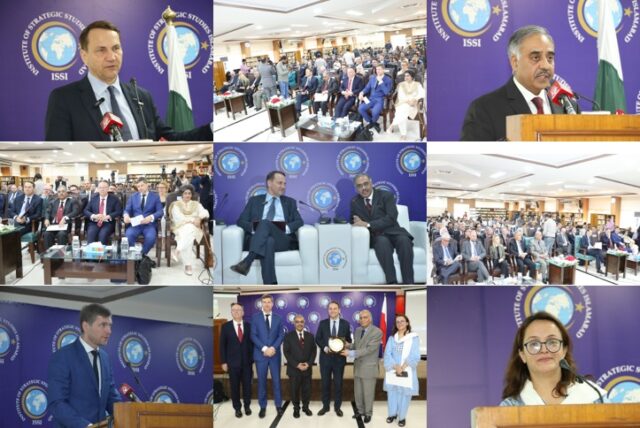
To evaluate the BJP government’s performance during the first year of its third term, with a particular focus on how ‘Modi 3.0’ fared on domestic socio-political, economic, military, and foreign policy fronts, the India Study Centre (ISC) at the Institute of Strategic Studies Islamabad (ISSI) organised a Round Table today, titled: “One Year of Modi 3.0 – India’s Foreign Policy Ambitions and Domestic Governance.”
The Round Table was attended by senior diplomats, practitioners, academics, think-tank experts, and area specialists. Director General ISSI Ambassador Sohail Mahmood delivered welcome remarks. Of the panellist, Dr. Raashid Wali Janjua spoke on the internal dynamics of Modi 3.0, while Ambassador Riffat Masood covered the foreign policy arena. The distinguished participants included former Foreign Minister Ambassador Inam ul Haque.
During the course of discussion, it was highlighted that since the beginning of 2025, the BJP has incurred losses in the internal political space, while India lost considerable ground in its international standing and image. There is deepening polarization in Indian society on political, social, economic, ethnic, linguistic and regional lines. The Waqf bill, migration laws, and revision of voter lists in states like Bihar indicated further shrinking space for the Muslims. ‘Saffronisation’ of key state institutions — including the Planning Commission, Election Commission, High Judiciary, and the Armed forces — has been the hallmark of the Modi era.
Experts also noted an ostensible rift between the RSS and BJP on a range of issues from appointment of BJP party President, to PM Modi approaching the age of 75 years, to some BJP segments’ clamour for a course independent from Nagpur. In the aftermath India-Pakistan conflict of May 2025, PM Modi’s popularity has declined, but he could probably manage the mounting challenges. Internally, India is coping with issues like poverty, income inequality, and growing unemployment. In today’s India, is witnessing creeping authoritarianism and majoritarianism. Pluralism is increasingly losing ground.
It was highlighted that in order to understand Indian policies, particularly towards Pakistan, the Indian “mindset” needs to be understood first. Experts pointed out that India never accepted the creation of Pakistan and the current BJP leadership believed in the RSS fantasy of Akhand Bharat. Mr. Modi’s disdain for Pakistan and his expansionist designs are reflective of this mindset. Across the world, election campaigns mostly focus on internal issues, but in the case of India, election campaigns are more about Pakistan-bashing to stoke nationalism and garner votes.
It was underscored that despite ongoing tensions between India and the U.S., the relationship between the two countries would likely remain intact as it is institutionalised and both countries are strategically important to each other. Notably, as compared to the Biden Administration, which was tilted towards India, President Trump has decided to maintain a balance between India and Pakistan.
Participants were of the view that both Congress and the BJP are two sides of the same coin. No matter who holds power, India’s antagonistic posture towards Pakistan will remain the same. Indian arrogance has given way to resentment in South Asian countries, but for smaller states in the region it will be difficult to go against India.
Participant held the view that since, according to Indian side, “Operation Sindoor is still continuing”, Pakistan must remain vigilant and prepared to effectively respond to new risks and challenges likely to arise in India-Pakistan relations or regionally. Pakistan must be ready for any eventuality, including further false flag operations. Furthermore, fallacious thinking exists in India that there is space for conventional war under the nuclear threshold. Pakistan must take steps to disabuse India of this false, irresponsible and dangerous notion. The paramount importance for Pakistan to ensure economic strength and robust defence and deterrent capability was also underscored.
Participants cautioned that under Modi, Kashmir’s religious and cultural identity is at risk. Pakistan must continue to raise the Jammu and Kashmir dispute proactively at all available forums. On Kashmir, as well as India’s decision of holding the Indus Water Treaty (IWT) in abeyance, Pakistan must explore more diplomatic and legal options. The upcoming United Nations General Assembly (UNGA) session would be a good opportunity for Pakistan to raise these two issues. More importantly, Pakistan must work on building more water reservoirs and improving its domestic water management with urgency.
The Round Table concluded with a vote of thanks by Ambassador Khalid Mahmood, Chairman BoG, ISSI.

Pakistan needs a well-coordinated cybersecurity strategy

0

ISLAMABAD : During a discussion on “Cyber Threat Intelligence,” hosted by the Institute of Regional Studies (IRS) Islamabad in collaboration with the Pakistan Information Security Association (PISA), Ambassador Jauhar Saleem, President of IRS, emphasized the need for a well-coordinated strategy to safeguard Pakistan’s digital infrastructure. “In the age of hybrid warfare, where cyber threats have a devastating impact on national security, we need a proactive approach,” he stated. He pointed out that cyber-attacks have become a crucial tool in warfare and stressed the importance of investing heavily in the cybersecurity domain to address emerging challenges. Ambassador Saleem also highlighted the necessity for robust cooperation among national stakeholders to build an efficient digital infrastructure in the country.
Mr. Ammar Jafri, Director of the Pakistan Information Security Association (PISA), spoke at the event, stating that cyber resilience is a national priority rather than merely a technical goal. He argued that to establish a secure nationwide cyber infrastructure, it is essential to shift our strategy and approach from reactive to proactive. Echoing Ambassador Saleem’s sentiments, Mr. Jafri stressed the need to foster collaboration across the public, private, and academic sectors to develop state-of-the-art digital infrastructure.
Dr. Mehreen Afzal, Director of Governance, Risk, and Compliance at the national CERT, explained that the ultimate objective of cybersecurity is to protect human beings. She noted that as technology advances, the number of threats increases, with all devices focused on serving people.
Mr. Najeeb ul Hassan, Director of Training at NCCIA, elaborated on the distinction between cybercrime and cybersecurity. He explained that while cybercrime efforts focus on protecting against attacks, cyber threat intelligence involves the need for actionable information.
While discussing best practices from around the world, Mr. Zubair Ali Bhatti, CEO and Co-Founder of HPC, emphasized the importance of developing the mindset of the youth. He highlighted the need to provide solutions, integrate tools, and work on specific technologies, such as AI bots.
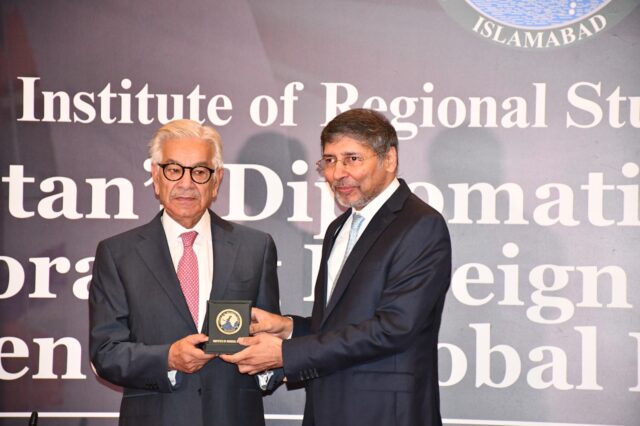
The event concluded with Ambassador Saleem presenting tokens of appreciation to all distinguished speakers, symbolizing a collective commitment to strengthening Pakistan’s cybersecurity posture.

US Views Pakistan as a Stabilizing Actor in the Region”, US-based Pakistani Expert

0

ISLAMABAD: For the US, Pakistan is a security guarantor and a stabilizing force in the region”, says Mr Naad e Ali, a Middle Eastern expert based in Washington D.C. He was speaking at a roundtable discussion hosted by Institute of Regional Studies, Islamabad. Mr Ali discussed how Pakistan gained strategic relevance in the eyes of President Trump. “President Trump praises the countries having strategic clarity”, he mentioned. Mr Ali argued that after the 12-day Iran-Israel war, the regime change objective of the US was transformed into containing Iran’s ideological reach and change regime’s behaviour. He further elaborated that any instability inside Iran would have a rippling effect on Pakistani side of Balochistan where the US was keen to explore rare earth minerals. Predicting the future US-Iran talks, Mr Ali argued that Pakistan could assume the role of a bridge builder in bringing Iran to the negotiating table.
Maj. Gen. (Retd.) Dr Samrez Salik highlighted Pakistan’s soft power engagement with Iran and its consistent role in de-escalating regional conflicts. He emphasized the importance of maintaining cordial ties with Iran suggested that Pakistan’s long-term strategic interests lie in regional stability. Maj. Gen (R) Samrez highlighted that Iran’s defiance of the US was the longest standoff by a regional actor against the superpower in modern history. Furthermore, drawing lessons from the past, he argued that Pakistan had a long-history of mediating between the rival and over the years its role had matured. He also suggested that Iran had to rethink about its regional policy vis-à-vis India due to latter’s close association with Israel.
Earlier, in his remarks, Ambassador Jauhar Saleem, President IRS, mentioned Iran’s nuclear capability was declared for peaceful purposes. “It is Pakistan’s long-standing and principled stance of supporting Iran’s right to peaceful nuclear technology”, Amb Jauhar stressed. He also emphasized that the revival of the Joint Comprehensive Plan of Action (JCPOA) was essential. Amb Jauhar praised Pakistan’s role of responsible diplomacy, adding that Islamabad once again acted as a stabilizing and mediating force in the regional crisis.

ISSI Celebrates Nelson Mandela International Day

0

ISLAMABAD :The Centre for Afghanistan, Middle East and Africa (CAMEA) at the Institute of Strategic Studies Islamabad (ISSI), in collaboration with the Ministry of Foreign Affairs and the Pakistan Africa Institute for Development and Research (PAIDAR), organized an event to commemorate Nelson Mandela International Day. The proceedings, which began with the national anthems of Pakistan and South Africa, were moderated by Ms. Sarah Akram, Research Fellow, CAMEA. Speakers included Ambassador Sohail Mahmood, Director General ISSI; Mr. Rudolph Pierre Jordaan, Acting High Commissioner of South Africa to Pakistan; Mr. Malik Muhammad Farooq, High Commissioner of Pakistan to South Africa; and Ambassador Khalid Mahmood, Chairman BOG ISSI. The Keynote Speaker was Ambassador Hamid Asghar Khan, Additional Secretary (Africa), Ministry of Foreign Affairs and Chief Guest on the occasion was Senator Mushahid Hussain Sayed, President PAIDAR.

Senator Mushahid Hussain Sayed said that as a Pakistani, he has often been struck by the similarities between Quaid-e-Azam Muhammad Ali Jinnah and Nelson Mandela and added that the latter was a strong supporter of self-determination for the people of Palestine and Kashmir. He praised Mandela’s ability to connect with the grassroots, speaking the language of the masses, and highlighted his generosity and deep commitment to friendships. He stressed that the greatness of Mandela must be recognised, describing him as a shared heritage and a global role model for peace and reconciliation. Underscoring the role of education as a vital bridge between cultures and continents, he proposed renaming one of Pakistan’s Universities in Mandela’s honour and inviting students from the Global South.

In his remarks, Ambassador Sohail Mahmood paid tribute to Nelson Mandela, describing him as one of the most iconic figures who reshaped the moral compass of our times and stood firmly for justice, equality, and human dignity. He recalled Mandela’s 27 years of incarceration, during which his spirit remained unbroken and his commitment to non-violence unwavering. After his release, Mandela transformed personal suffering into national healing, promoting justice, tackling poverty, and empowering youth. His universal vision of freedom and moral clarity made him a truly transformative leader. Ambassador Sohail highlighted Mandela’s visits to Pakistan, especially his historic visit to the Institute of Strategic Studies Islamabad in 1992. He praised South Africa’s move at the International Court of Justice in support of the Palestinian cause as a reflection of Mandela’s enduring principles, and emphasized the need for moral courage in the pursuit of justice. He also noted Africa’s growing potential and urged deeper Pakistan-Africa engagement. Mandela, he concluded, remains a guiding light for humanity and a living legacy for a more just and equitable world.

Ambassador Hamid Asghar, in his remarks, paid tribute to Nelson Mandela as one of the most admired figures in recent history who stood for justice, equality, and against discrimination. He recalled Mandela’s long years of imprisonment, his unwavering commitment to a non-violent struggle, and his focus on freedom, justice, anti-corruption, poverty alleviation, youth empowerment, and land reforms as president. Highlighting Africa as the continent of the future, he noted Pakistan’s principled support for liberation movements and praised South Africa’s efforts at the ICJ as upholding Mandela’s legacy.

Ambassador Rudolph Pierre Jordaan, highlighted that Nelson Mandela was more than a political leader; he was a symbol of moral courage, unity, and justice. He stated that Mandela once said, “If I did not leave my bitterness and hatred behind, I would still be in prison,” after spending 27 years incarcerated for opposing apartheid. He added that Mandela believed in action, not just words, and recalled how Mandela united South Africa during the 1995 Rugby World Cup despite opposition within his own party.

Ambassador Malik Muhammad Farooq hailed Nelson Mandela as a global symbol of justice and reconciliation whose principles continue to provide guidance. He recalled Pakistan’s steadfast support for South Africa’s struggle for independence and noted that Mandela paid two historic visits to Pakistan. During one of these visits, he addressed the Joint Session of Parliament and was also awarded the highest civil award, the Nishan-e-Pakistan. He urged that communities should be brought together in the spirit of Mandela’s lifelong fight against oppression and his vision of a just and inclusive world.

Ambassador Khalid Mahmood, in his concluding remarks, described Nelson Mandela as a symbol of peace, justice, equality, and reconciliation. He noted that Mandela’s legacy continues to inspire South Africa and the world. He highlighted Mandela’s two visits to Pakistan, including one to ISSI, underscoring his enduring influence as a beacon of hope for those facing adversity today.

The event also feathered an exhibition organized by the High Commission of South Africa in Pakistan to pay tribute to the legacy of Nelson Mandela.

Prospects for a Gaza Ceasefire: Diplomatic Stalemates and the Path Ahead

0

Islamabad:The Institute of Regional Studies (IRS) successfully hosted a high-level webinar on “Prospects for a Gaza Ceasefire: Diplomatic Stalemates and the Path Ahead,” bringing together prominent scholars to examine the ongoing conflict in Gaza, the political deadlock and the prospects for a sustainable ceasefire.
Dr. Rizwan Naseer, Senior Research Fellow at the Institute of Regional Studies, opened the session by highlighting the worsening humanitarian crisis in Gaza due to Israel’s ongoing military campaign and alleged use of starvation as a weapon of war. Dr. Naseer criticized the failure of international institutions and media to uphold human rights standards, pointing to UN warnings, ICC allegations, and repeated U.S. vetoes at the Security Council. He highlighted the need for urgent and coordinated global efforts to support the Palestinian cause.

Delivering one of the principal talks, Dr. Yezid Sayigh, Author and Senior Fellow at the Malcolm H. Kerr Carnegie Middle East Center, identified the political calculations and interests of Benjamin Netanyahu as the primary obstacle to a Gaza ceasefire. “What Netanyahu has been doing from the very first day of the war has been to escape a political predicament. Almost everything has been about buying time and time is bought with Palestinian lives”, he stated. Dr. Sayigh stressed that Israel’s military actions lack a clear strategic end goal.
Turning to regional dynamics, Dr. Sayigh stated that Israel’s policies are creating an intensely destabilizing impact on Egypt and Jordan, both fearful of mass Palestinian displacement. Looking ahead, he argued that “there is no amount of polite international pressure sufficient to shift an Israel that has moved so far to the right,” concluding that only sustained global mobilization, solidarity and coalition-building can pave the way for meaningful change.

The second talk was delivered by Dr. Abdaljawad Omar, Writer and Lecturer in the Philosophy and Cultural Studies Department, Birzeit University. He situated the Gaza War within historical continuum of Zionist settler-colonialism, arguing that Israel’s aim is not only military victory but the fragmentation and political incapacitation of the Palestinian people. Dr. Omar remarked that the ceasefire negotiations resemble the interrogation that Palestinian prisoners face in Israeli prisons. “From a Palestinian perspective, all dealing here is bad dealing. The problem is that the whole architecture of negotiation is placed on using leverage against Palestinians, to enable an Israeli victory”, he stated. He also addressed the disarmament of Palestinian resistance movements, noting that such measures, often framed as prerequisites for peace, would in fact neutralize the only deterrent forces capable of imposing costs on Israeli expansionism.
The event concluded with a dynamic Q&A session. Speakers stressed that symbolic recognition of Palestine must be matched by UN membership and genuine economic sovereignty. They also criticized the inaction of Arab governments and called for a reinvigorated Palestinian liberation movement supported by stronger global solidarity.

ISSI commemorates Youm-e-Istehsal with Seminar on “August 5, 2019: Another Turning Point in the Jammu and Kashmir Dispute

0

ISLAMABAD :The India Study Centre (ISC) at the Institute of Strategic Studies Islamabad (ISSI) hosted a seminar, titled “August 5, 2019: Another Turning Point in the Jammu and Kashmir Dispute.” The event was organized to commemorate the struggle, resolve, and sacrifices of the Kashmiri people, and observe Youm-e-Istehsal to condemn India’s unilateral and illegal actions of August 5, 2019, with regard to the Indian Illegally Occupied Jammu and Kashmir (IIOJK). Ambassador Masood Khan, Former President of the State of Azad Jammu and Kashmir, graced the occasion as the Chief Guest and Ambassador Imran Ahmed Siddiqui, Additional Secretary (Asia Pacific), Ministry of Foreign Affairs Pakistan, as the Guest of Honour. Speakers included Ambassador Sohail Mahmood, Director General ISSI; Ambassador Khalid Mahmood, Chairman BoG, ISSI; Dr. Sheikh Waleed Rasool, Assistant Professor, Riphah International University; Dr. Raja Qaiser Ahmed, Assistant Professor, SPIR, Quaid-e-Azam University; Mr. Altaf Hussain Wani, Chairman Kashmir Institute of International Relations (KIIR); Ms. Naila Altaf Kayani, Human Rights Activist; Mr. Muhammad Farooq Rehmani, Former Convener of APHC AJK; and Barrister Nida Salam, Lawyer, Islamabad High Court.
In his remarks on the occasion, Ambassador Sohail Mahmood said that for the last six years, the IIOJK had remained the ‘most militarized zone’ in the world; the suppression of Kashmiris by Indian security forces reached unseen scale; and the human rights violations escalated to the level of ‘crimes against humanity’ with ‘collective punishment’ of entire communities. However, despite all its wanton repression, India has neither been able to dampen the spirit of the Kashmiris nor break their will to fight for their inalienable right to self-determination. New Delhi is now making an unacceptable assault on the Kashmiris’ rights, land, and distinct cultural identity and working to turn the Kashmiri Muslim majority into a minority on their own soil. These sinister designs indicate replication of the Israeli model to implement a ‘settler-colonial project.’
Ambassador Sohail Mahmood noted that, unable to control the resistance movement by force, India has reverted to its familiar ploy of branding the indigenous Kashmiri struggle as “terrorism” and accusing Pakistan of complicity in the so-called “cross-border terrorism.” Failing to use the Pahalgam attack of 22 April 2025 to deter Pakistan militarily and diplomatically, New Delhi has now weaponized water. Its willful smear campaign against Kashmiris and Pakistan and reckless military adventurism show that the Hindutva-driven BJP government has no interest in stability and peaceful co-existence.
While reflecting on Pakistan’s steadfast support for the just cause of the Kashmiri people, Ambassador Sohail Mahmood emphasized that India and the international community must recognize that Kashmir is a dangerous flashpoint and that durable peace and stability in South Asia remains contingent upon a just and peaceful resolution of the Jammu and Kashmir dispute in accordance with the UNSC resolutions. This, he stressed, can only be ensured through the collective endeavours of Kashmiris, Pakistan, and the world community.
In his remarks, Chief Guest Ambassador Masood Khan warned that the unresolved Kashmir dispute will intensify the smog of war in South Asia, making it catastrophic for the region and the world. He noted that the Indo-Pak conflict of May 2025 challenged the narrative of India’s regional military dominance and brought renewed focus on Kashmir as central to South Asia’s long-term peace and stability. Discussing Pakistan’s position on Kashmir, Ambassador Khan highlighted the potential of the Pakistani and Kashmiri diaspora to reach global conscience regarding the plight of the Kashmiri people. He emphasized the need for sustained understanding of India’s socio-political landscape and its strategic culture through dedicated research initiatives.
While lauding Pakistan’s efforts to raise the Kashmir Issue at global forums including the UN Security Council, General Assembly, and Human Rights Council, Ambassador Masood Khan called for stronger communication with global institutions and decision-making bodies. Further, he advised Pakistan to remain vigilant of any new development with regard to the political status of IIOJK and strategically respond to it.
Ambassador Imran Ahmed Siddiqui noted that India’s demographic and electoral engineering in IIOJK following 5 August 2019 was in clear violation of the International Law, International Humanitarian Law, Article 1 of the UN Charter, and the 4th Geneva Convention. The incarceration of Kashmiri political leadership and a cap on political activity in the occupied territory reflect the broader design of eliminating truly representative political class.
While reemphasizing Pakistan’s resolve to firmly stand with the Kashmiris’ right to self-determination, Ambassador Imran Siddiqui stressed that ‘Youm-e-Istehsal’ was a renewed call for international community to address the miseries taking place under the Indian occupation and resolve the dispute according to the will of the Kashmiri people. He reiterated Pakistan’s full support for the Kashmiris until the realization of their right to self-determination.
Earlier, Dr. Khurram Abbas in his introductory remarks noted that, following its actions of 5 August 2019, India was determined to erase the Kashmiri identity through a myriad of structural and cultural changes. Lacking any legal, political, and moral basis, unilateral actions of India related to Indus Waters Treaty or Jammu and Kashmir are fueling chaos and uncertainty, and squeezing the space for meaningful engagement.
Dr. Sheikh Waleed Rasool, while presenting a historical overview of the Kashmiri struggle, shed light on administrative measures being taken by India to disenfranchise and dispossess Kashmiri Muslims in the aftermath of 5 August 2019. Moreover, drawing from an academic background, Dr. Raja Qaiser Ahmed presented an overview of India’s shifting constitutional narratives on IIOJK and how they contributed to New Delhi’s fiercer occupation of the territory. He called upon the youth to engage in deep research and produce quality academic work to contribute to global awareness about the Kashmir issue.
Mr. Altaf Hussain Wani explained how Kashmiri people were broken due to broken promises and the world silence on their miseries. He also highlighted how the UN human rights machinery and international human rights organizations had helped advance the cause and stressed that more engagement on these platforms would facilitate efforts for breaking the ‘silence.’ Similarly, Ms. Naila Altaf Kayani explained the civilizational, cultural, and linguistic suppression of the Kashmiri people at the hands of Indian occupying forces. She underscored that the Indian state was not just erasing the political identity but the cultural soul and very existence of Kashmiris. She stressed that it was crucial to continue to raise awareness and resist this systematic erasure.
Mr. Muhammad Farooq Rehmani reinforced the need to build on the current global environment favouring Pakistan and the Kashmir cause. Barrister Nida Salam highlighted that no international legal framework permitted India to declare Kashmir its internal matter and that its status cannot be altered without a UN-supervised plebiscite.
The seminar was concluded with remarks by Ambassador Khalid Mahmood, Chairman BoG, ISSI.

Pakistan’sRetaliation in May 2025 Reasserted Pakistan’s Vow on Kashmir:” Muhammad Qasim Noon, Chairman Kashmir Committee

0

Islamabad: The Institute of Regional Studies (IRS), Islamabad, hosted
a high-level seminar titled “Unheard Voices of IIOJK: Six Years of Struggle
after Article 370” to mark the sixth anniversary of India’s unilateral
revocation of Articles 370 and 35-A that stripped Indian Illegally Occupied
Jammu & Kashmir (IIOJK) of its autonomous status on August 5, 2019. Parliamentarians,
senior defence officials, Kashmiri leaders, and civil society representatives
attended the event to honour the resilience of the people of IIOJK and
reinforce Pakistan’s enduring political, diplomatic, and moral support for
their right to self-determination.

Addressing the seminar, Ambassador
Jauhar Saleem, President IRS, termed India’s 2019 actions “a blatant
violation of international law and an attempt at demographic engineering.” He
stressed that despite curfews, lockdowns, mass detentions, internet shutdowns
and militarisation, India has failed to suppress the Kashmiri identity or
silence their demand for freedom.

Chairman Parliamentary Committee on
Kashmir Rana Muhammad Qasim Noon
declared Kashmir “a sacred national cause embedded in Pakistan’s ideology,”
adding that true peace and stability in South Asia remain impossible without
resolving the Kashmir dispute as per UN Security Council resolutions. He paid
tribute to the Pakistani armed forces for their defence during the May 2025
conflict, which he said had “reshaped the regional balance”.

Ms. Farzana Yaqoob, former AJK Minister, said Pakistan’s stance had grown more
articulate and proactive on global forums. She proposed redefining August 5 as
a “Day of Courage” to honour Kashmiri resistance, and urged Pakistan to
adopt legal diplomacy by pursuing international casework against Indian human
rights violations in IIOJK.

Speakers including MNA- Sardar Fatehullah
Khan Miankhel(Chairman Standing Committee on Defence), Sheikh Abdul Mateen (Senior Hurriyat leader) and Abdul Hameed Lone (Kashmiri Leader) rejected
India’s “constitutional terrorism” and exposed how thousands of Kashmiri
civilians, activists, and political leaders continued to face arrest, torture,
and extrajudicial killings. They reaffirmed that the Kashmiri struggle is one
for identity and justice, not territory.

The seminar concluded with a
unanimous call recognition of August 5 as a symbol of Kashmiri resilience
against oppression; unity across Pakistani civil-military institutions in
advocating Kashmir’s right to self-determination and mobilising international
conscience against India’s continued human rights abuses.

“The Kashmiri freedom
struggle mirrors other historic battles against occupation and injustice,”
stated the final communique. “Like South Africa, Palestine or Bosnia — history
will side with those who stand for truth and freedom. Kashmir will be free.”

Message of H.E. Reza Amiri Moghadam on the Birth Anniversary of Mohtarma Fatima Jinnah

0

Islamabad :On the occasion of the July 31th, the Birth Anniversary of Mohtarma Fatima Jinnah, Madr-e-Millat of Pakistan, i would like to pay my sincere tribute to her exemplary and inspiring character. Everybody in Pakistan honors her visionary leadership, relentless courage, and invaluable contributions to the Pakistan and Muslim World.

ISSI hosts event to Commemorate Morocco’s ‘Enthronement Day

0

Islamabad :The Centre for Afghanistan, Middle East and Africa (CAMEA) at the Institute of Strategic Studies Islamabad (ISSI), in collaboration with the Pakistan Africa Institute for Development and Research (PAIDAR), organized an event to commemorate Morocco’s ‘Enthronement Day’. The proceedings began with the national anthems of Pakistan and the Kingdom of Morocco and were moderated by Ms. Amina Khan, Director CAMEA. Speakers included Ambassador Sohail Mahmood, Director General ISSI; Ambassador Mohammed Karmoune, Dean of the African Diplomatic Corps and Ambassador of Morocco to Pakistan; Ambassador Syed Adil Gilani, Ambassador of Pakistan to Morocco; and Ambassador Khalid Mahmood, Chairman BOG ISSI. The Chief Guest on the occasion was Mr. Mushahid Hussain Sayed, President PAIDAR, and the Keynote Speaker was Ambassador Hamid Asghar Khan, Additional Foreign Secretary (Africa), MOFA.

Senator Mushahid Hussain Sayed, highlighted the historical context of Pakistan-Morocco relations, recalling Pakistan’s support for Morocco during its struggle against colonial rule. He shared how prominent Moroccan leader Ahmed Balafrej was granted Pakistani passport and how Pakistan’s then Foreign Minister, Sir Zafarullah Khan, facilitated him to present Morocco’s case at the United Nations. He also noted Morocco’s rich civilizational heritage, referring to the world’s oldest University in Fez and the legendary 14th-century traveler Ibn Battuta. Mr. Mushahid Hussain Sayed commended the warmth and affection of the Moroccan people and underscored the importance of close collaboration between Pakistan and Morocco to further reinforce the enduring bonds between the two peoples.

Ambassador Sohail Mahmood, in his remarks, said that over the past 26 years, under His Majesty King Mohammed VI’s wise and dynamic leadership, Morocco has been on a journey of forward-looking and systematic reform leading to remarkable renewal and progress. He noted that the Kingdom has made impressive strides in people-centered governance, infrastructural transformation, industrial diversification, green transition and innovation, social inclusion, human development especially youth empowerment, and active global engagement. At the same time, Morocco has remained firmly rooted in its civilizational heritage and continued to promote inter-faith dialogue, mutual understanding, and peaceful coexistence. He further said that Morocco and Pakistan have long enjoyed a relationship of friendship and goodwill, based on mutual respect and anchored in a shared commitment to solidarity and cooperation. Our diplomatic relations, established in the 1950s, have grown from strength to strength over the decades. As active members of OIC, the Group of 77, and the Non-Aligned Movement, Pakistan and Morocco share a common vision for regional peace, sustainable development, and an equitable international order. Pakistan deeply appreciates Morocco’s principled positions on key regional and global issues and looks forward to continuing close engagement in all relevant fora. He concluded by underlining ISSI’s intent in forging cooperative ties with Moroccan think-tanks and research institutions as part of people-to-people links.

Ambassador Karmoune highlighted Morocco’s economic and social progress despite global challenges, noting significant growth in industrial exports and tourism. He invited Pakistani investors to explore opportunities in Morocco’s large-scale development projects and benefit from its extensive trade network. Emphasizing the cordial bilateral relations rooted in shared history and mutual interests, he called for stronger collaboration between Pakistan and Morocco. He noted that upcoming high-level meetings between the two countries are aimed at identifying new areas for cooperation.

Ambassador Hamid Asghar Khan said the glue that holds Morocco together is His Majesty, whose leadership ensures good governance and a focus on public service. He noted the country’s success, owing to its active foreign policy. He praised Morocco’s excellent infrastructure and called it a safe and hospitable country. He added that tourism brings 17.5 million visitors annually and contributes 14% to the GDP. He said Pakistan and Morocco have enjoyed warm relations, and there is a need to enhance cooperation as Morocco is not just a regional leader but a continental one with immense potential.

Ms. Amina Khan highlighted that the relationship between Pakistan and Morocco is marked by mutual trust, cultural affinity, and a shared vision for peace and prosperity. Moreover, she said that we view Morocco as a vital partner in advancing Pakistan’s engagement with Africa. She further opined that there is enormous potential to enhance cooperation between Pakistan and Morocco in key sectors including higher education, climate resilience, renewable energy, agriculture and digital connectivity.

Ambassador Syed Adil Gillani, while expressing his views, said that Morocco is an example of prosperity and development with landmark achievements in various fields like governance. He further said that Morocco is a global leader in sustainable development, with access to good health care and education. He concluded by saying that Morocco’s global influence is equally remarkable.

Ambassador Khalid Mahmood, in his vote of thanks, expressed his good wishes for the people of Morocco and said that the relationship between Pakistan and Morocco is exemplary and the strategic location of Morocco provides it with a gateway to international markets.

Google search engine
0FansLike
0FollowersFollow
0SubscribersSubscribe

Recent Posts