
12.7 C
Islamabad
Home Blog Page 8

IRS-BNU hold second high-level dialogue on Building Peace in South Asia
0

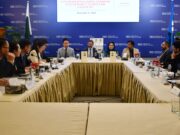
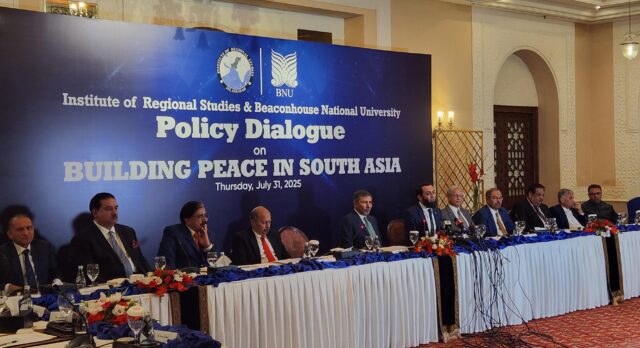
Islamabad :The Institute of Regional Studies, (IRS) and Beaconhouse National University, (BNU) convened intellectuals and experts for a roundtable discussion on the challenges and opportunities for peace in South Asia following the military clash between Pakistan and India.
Mr. Attaullah Tarar, Federal Minister for Information and Broadcasting, was the Chief Guest, and Gen. Zubair Mahmood Hayat, NI (M), Former CJCSC, was the Guest of Honor.
The policy dialogue was timely as Pakistan seeks a regional and global strategy to restore peace and stability disrupted by India’s risky military doctrine, which escalated regional tensions to the brink of nuclear conflict.
Speaking on the occasion, Mr. Attaullah Tarar said that peace must be rooted in reciprocity. Pakistan has always played an active role in strengthening peace in South Asia and will continue to play a similar role in the future. However, he cautioned that Pakistan will respond to any aggression against India as it did during Operation Bunyan-um-Marsoos. He added that Pakistan was fully capable to render a befitting response against any act of aggression. On Kashmir issue, he was of the opinion that the right of Kashmiris to self-determination is now a global agenda and Pakistan will continue to support this struggle steadfastly. Its resolution demands urgency, now more than ever, especially in the wake of recent war between India and Pakistan which triggered the nuclear flashpoint in this region, mainly due to India’s irresponsible behavior.
Amb Jauhar Saleem, President IRS, Dr. Moeed Yusuf, VC BNU and former NSA and Director of Beaconhouse Center for Policy Research Amb. Mansoor Ahmed Khan initiated the discussion with an analysis of South Asia’s security landscape following the Pahalgam incident.
The participants of the dialogue included Senator Mushahid Hussain Sayed, Mr. Khurram Dastgir Khan, Former Minister of Defence and Foreign Affairs, Lt. Gen(r) Nasser Khan Janjua, Former National Security Advisor, Lt. Gen. (r) Aamer Riaz, HI (M), Former President NDU, Admiral (r) Asif Sandila NI (M), former Naval Chief, Air Marshal (r) Saeed Muhammad Khan, former VCAS, Amb. Ashraf Jehangir Qazi, Former Amb. to US, India and China, Amb. Ali Sarwar Naqvi, Executive Director, Center for International Strategic Studies (CISS), Amb. Aizaz Ahmad Chaudhry, Former Foreign Secretary, Lt. Gen. (r) Naeem Khalid Lodhi, Defence Analyst, Mr. Azfar Ahsan, Former Minister for Investment and Chairman of the Board of Investment, Amb. Shafqat Kakakhel, Chairperson, BoG SDPI, and former UN Assistant Secretary General, Mr. Zahid Hussain, Senior Journalist, Author, Dr Maria Sultan, Chairperson & President of the South Asian Strategic Stability Institute (SASSI), University, Dr Huma Baqai, Rector Millennium Institute of Technology and Entrepreneurship, Former Professor at IBA, Maj. Gen. (r) Kamran Khurshid, Strategic and Security Affairs expert, Mr. Ahmer Bilal Soofi, President Research Society of International Law, & Former Federal Law Minister, and Mr. Fahd Husain, Senior Broadcast Journalist.
Ethiopian Envoy Dr. Jemal Beker Named ‘Ambassador of Margalla Hills Park’

0

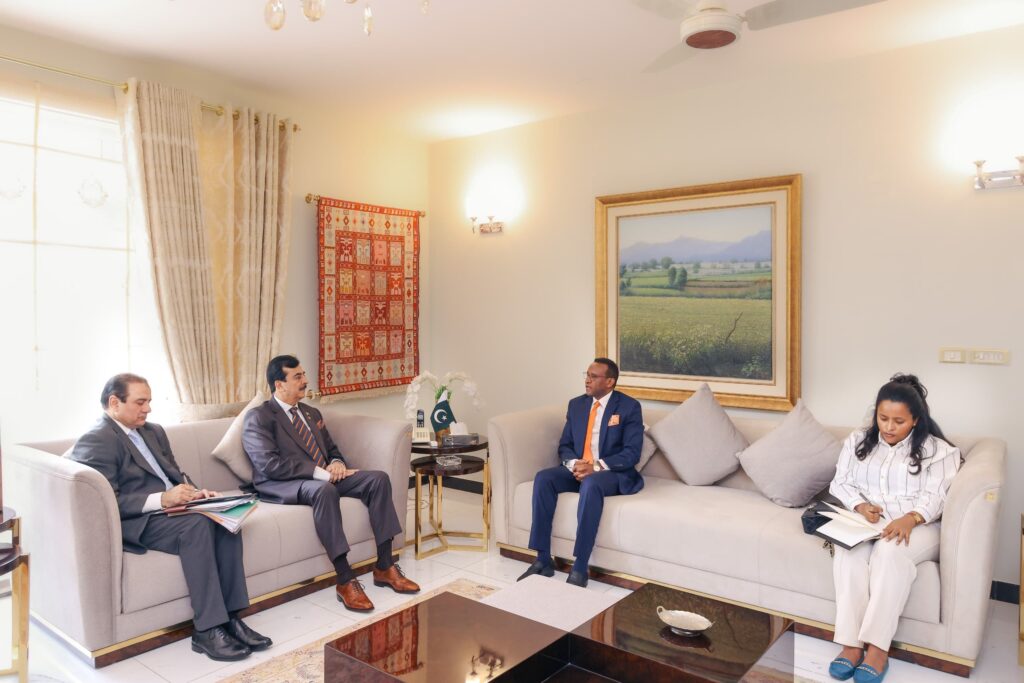
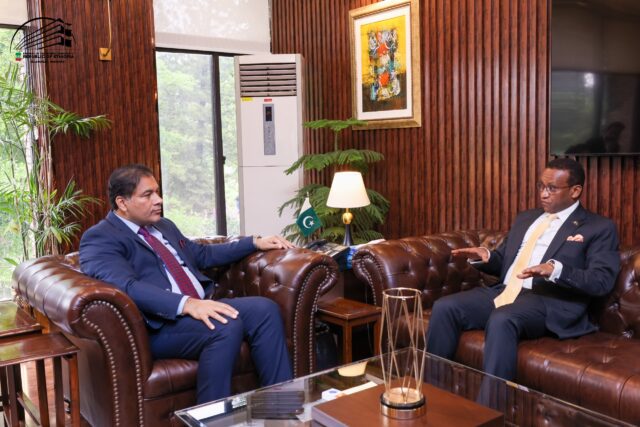
Islamabad :​H.E. Dr. Jemal Beker Abdula, Special Envoy and Ambassador Extraordinary of the Federal Democratic Republic of Ethiopia, has been honored with the title of “Ambassador of Margalla Hills National Park” for his dedicated efforts to promote a clean and green environment within the park.
​H.E. Muhammad Ali Randhawa, Chairman of the Capital Development Authority (CDA) and Chief Commissioner Islamabad, bestowed the title upon the Ambassador during their meeting at the CDA Headquarters.
​The two officials discussed potential collaborations in smart city solutions, urban greenery, and capacity building through institutional linkages and technical exchanges.
​The Ambassador briefed the CDA Chairman on Ethiopia’s corridor development project—a large-scale urban transformation initiative led by Prime Minister H.E. Dr. Abiy Ahmed. This project focuses on infrastructure development, mass plantations, and riverside beautification to enhance living standards across Ethiopian cities, he added.
He also proposed establishing a sister city relationship between Addis Ababa and Islamabad to foster cultural and commercial ties between the two nations.
The Ambassador also informed the Chairman about the Ethiopian Embassy Islamabad’s upcoming tree plantation campaign in Islamabad,as part of Prime Minister Abiy Ahmed’s “Green Legacy Initiative”.
He extended an invitation to the CDA Chairman to participate in the campaign, aiming to raise awareness about climate change.
The ​Chairman also shared insights into the CDA’s performance, highlighting key development projects completed and underway in Islamabad.
He emphasized the CDA’s strategic vision to develop the capital into a modern, inclusive, and environmentally sustainable city.
The Chairman commended the Ambassador’s leadership in various clean and green campaigns in Islamabad, particularly within the Margalla Hills National Park.
He expressed keen interest in learning from Ethiopia’s experiences in sustainable urban development and riverside uplifting initiatives.

China-led Cooperation in South Asia: Experts Advocate a New Model of Regional Engagement Beyond Geopolitics

0

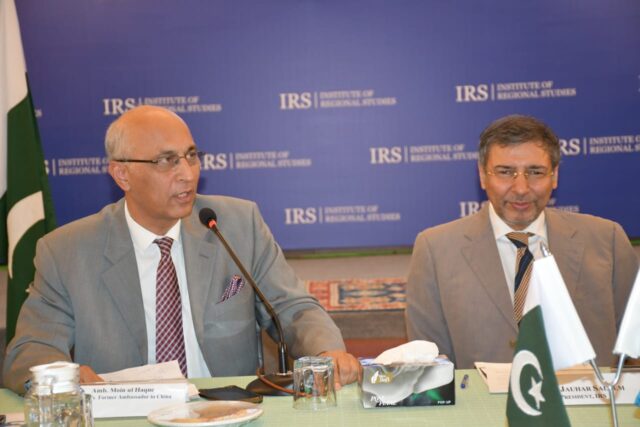
Islamabad: The China Program at the Institute of Regional Studies (IRS), Islamabad, hosted a panel discussion titled “China-led Cooperation in South Asia Beyond Geopolitics: Partnerships for Peace, Development and Common Prosperity.” The event brought together ambassadors, academics, policy analysts, and media professionals to examine the emerging trilateral cooperation of China, Pakistan, and Bangladesh.
In his opening remarks, Ambassador Jauhar Saleem, President of IRS, highlighted the urgency of rethinking regional collaboration in South Asia, a region home to over 1.9 billion people yet plagued by persistent underdevelopment, limited integration, and pressing environmental and geopolitical challenges. “South Asia accounts for only 5% of intraregional trade, the lowest in the world. We need to move beyond outdated frameworks and explore new models that prioritize cooperation over confrontation,” he said. Ambassador Saleem underscored that the trilateral mechanisms involving China, Pakistan, and Bangladesh are not a replacement for SAARC but rather a pragmatic response to its stagnation. He noted that Bangladesh, once heavily influenced by India, is now undergoing a developmental shift and diversifying its regional engagement. He further pointed to a growing number of cooperative frameworks, including the recent China–Pakistan–Afghanistan trilateral meeting, which demonstrate a commitment to shared development without strategic or military overtones.
Building on this, Ambassador Moin ul Haque, Pakistan Former Ambassador to China, echoed the need for such platforms amid consistent obstruction of regional initiatives. “SAARC began with high hopes—it was once seen as South Asia’s answer to the European Union or ASEAN. But time and again, we’ve seen constructive initiatives, whether from Pakistan or China, being blocked by a single member state,” he said, alluding to India’s opposition.
Recalling his tenure as Ambassador to China, Mr. Haque shared insights on successful collaborations that excluded India due to its reluctance to participate. He cited the establishment of the China–South Asia Countries Emergency Supply Reserve and a poverty alleviation and development cooperation center, initiatives that emerged during the pandemic and have since contributed to vaccine access and poverty reduction across South Asia.
Lt. Gen. Dr. Aminul Karim, professor at Bangladesh University of Professionals, added that, it is both possible and desirable for the three countries to build cooperation in key non-traditional sectors such as climate change, information and communication technology (ICT), and human resource development. This form of collaboration does not require a military alliance, which reinforces the idea that these nations are not pursuing geopolitical or strategic rivalry. Instead, their primary objective is to promote mutual development and prosperity. Such cooperation is rooted in shared interests, not in power politics. At the same time, this framework respects the diverse values, cultures, and belief systems of other countries, allowing space for peaceful coexistence and constructive engagement. In this spirit, the partnership can serve as a model of harmony and inclusive development.
Panelist Dr. Salma Malik, Associate Professor at the department of Defence and Strategic Studies, Quaid-i-Azam University, Islamabad, noted that countries like Bhutan, Nepal, Maldives, and Sri Lanka are growing increasingly disillusioned with India’s hegemonic posture. “China’s model of cooperation, as seen in the China–South Asia Cooperation Forum and the South Asia Expo in Kunming, offers a contrast—one rooted in inclusivity, green growth, and connectivity,” she said. The Expo brought together over 200 delegates from 10 countries, excluding India, to align development strategies and promote collaboration in areas such as agriculture, digital technology, healthcare, and trade.
Professor Lin Minwang, Deputy Director of the Centre for South Asian Studies & Vice Dean at the Institute of International Studies, Fudan University, emphasized that China’s initiatives are often misunderstood or mischaracterized. “China has repeatedly tried to allay Indian suspicions. It has no intention of creating a sphere of influence. Rather, it seeks open, inclusive, and mutually beneficial cooperation. Unfortunately, India has consistently declined these invitations,” he noted.
The discussion also touched upon media narratives and public diplomacy. Senior journalist and Author Mr. Kamran Yousaf offered a critical reflection on Pakistan’s diplomatic posture. “Our approach tends to be too defensive, too apologetic. We need to project confidence in our foreign policy. India’s military rarely comments on political matters, but it made a point to criticize this trilateral mechanism. That in itself reflects the significance of this evolving cooperation,” he said.
Participants collectively agreed that the future of South Asian cooperation cannot remain hostage to geopolitical rivalries. Trilateral and multilateral frameworks rooted in shared development goals, such as those emerging under the Belt and Road Initiative (BRI)—offer a much-needed alternative. As traditional institutions like SAARC remain paralyzed, these new platforms present a more flexible, functional model for promoting peace, reducing poverty, and enhancing connectivity in the region.
The event concluded with a call to move beyond speculative criticism and focus on the tangible benefits of regional cooperation. Panelists emphasized that these emerging frameworks are not anti-anyone but pro-development, offering inclusive and forward-looking pathways to prosperity. A vibrant Q&A session followed, marked by active audience engagement, making the discussion both insightful and fruitful while underscoring the importance of such platforms in shaping South Asia’s cooperative future.

Ambassador of Ethiopia Calls on Governor KPK to Discuss Bilateral Cooperation

0

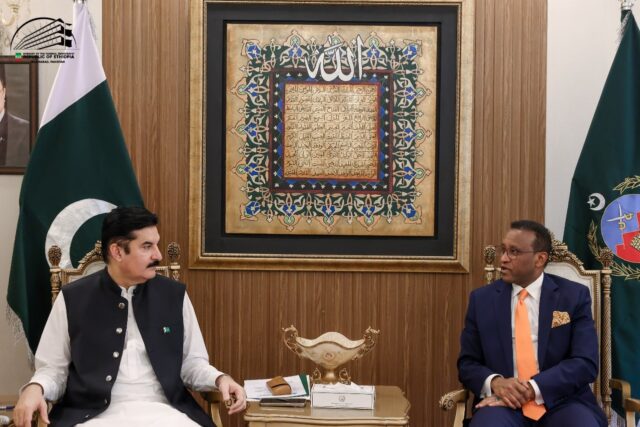
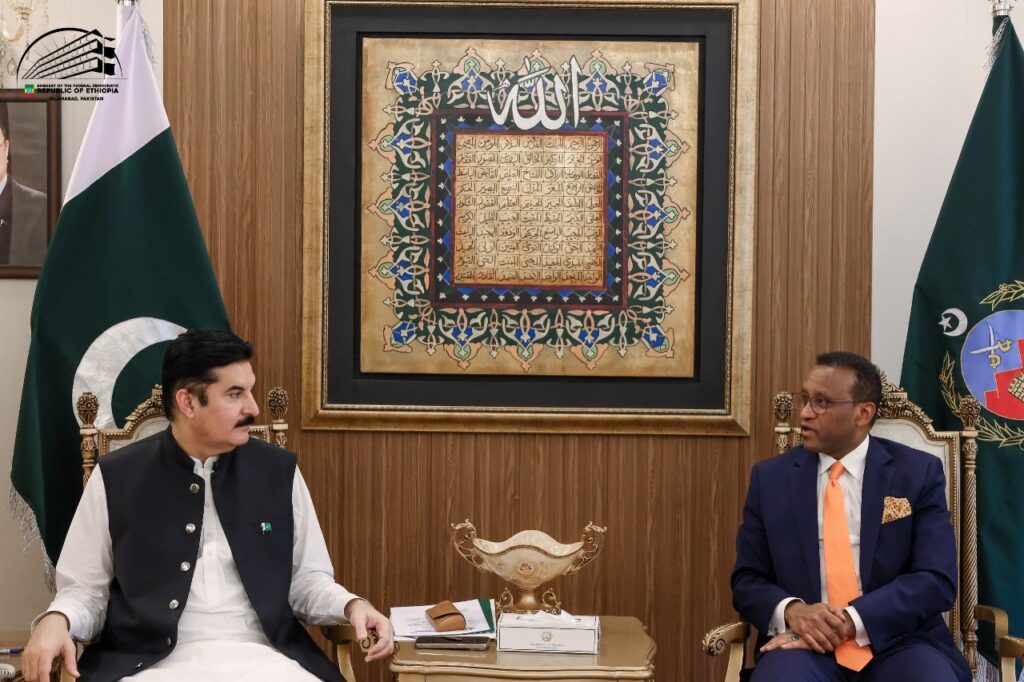
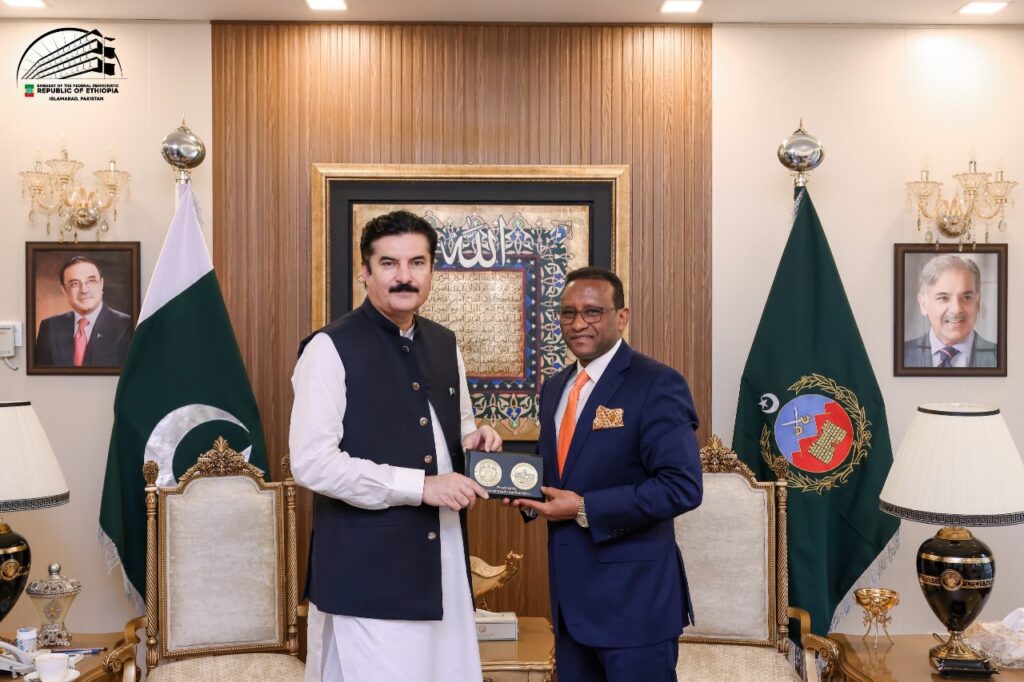
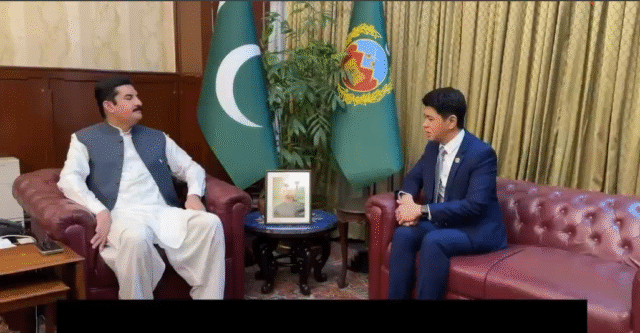
Islamabad:H.E. Dr. Jemal Beker Abdula, Special Envoy and Ambassador Extraordinary of the Federal Democratic Republic of Ethiopia, was called on H.E. Faisal Karim Kundi, the Honorable Governor of Khyber Pakhtunkhwa (KPK), at the Governor’s House in Islamabad to discuss bilateral cooperation across key sectors including trade, tourism, culture, and climate change.

​Both officials underscored the importance of fostering strong people-to-people relations through exchange of delegations in vital areas such as trade, investment, health, education, and forestry.
​Ambassador Dr. Jemal extended heartfelt condolences for the lives lost in Pakistan due to recent floods, emphasizing Ethiopia’s solidarity with Pakistan, a nation he noted is among the least contributors to climate change.
He also briefed the Honorable Governor on the Ethiopian Embassy Islamabad’s initiatives to raise awareness about environmental conservation and protection.
​The Ambassador highlighted the Government of Pakistan’s decision to twin its Green Pakistan Initiative with the Green Legacy Initiative of Ethiopia which is a brainchild of Ethiopian Prime Minister H.E. Dr. Abiy Ahmed.
He further elaborated on the expanding cooperation between the two countries, particularly in trade, investment, aviation, health, science and technology, and education.
​The Ambassador urged the Honorable Governor to mobilize the business community from Khyber Pakhtunkhwa for the 5th Pakistan-Africa Trade Development Conference & Single Country Exhibition (PATDC & SCE), for East African countries, scheduled for October 2025 in Addis Ababa, Ethiopia.
The Governor assured the Ambassador of his full support in mobilizing the business community for the exhibition. He also pledged to launch the Green Legacy Initiative in Khyber Pakhtunkhwa to raise awareness about climate change. The Governor highlighted Khyber Pakhtunkhwa’s strategic position as the “Gateway to Asia” and its immense potential for religious tourism, particularly its internationally significant Gandhara civilization.

Ethiopia, Pakistan Agree on Strengthening Parliamentary Cooperation

0

The Federal Democratic Republic of Ethiopia and the Islamic Republic of Pakistan on Friday agreed on the Parliamentary exchanges for further enhancing bilateral cooperation in diverse areas such as trade, investment, aviation, science and technology and climate change.
The crucial discussion to this end, held during a meeting between H.E. Dr. Jemal Beker Abdula, Special Envoy and Ambassador Extraordinary of Ethiopia to Pakistan and the Honorable Chairman Senate, H.E. Syed Yousuf Raza Gilani.
The two sides had an elaborate discussion on growing bilateral relations in various areas, and multilateral cooperation between the two countries for international peace and security.
H.E. Ambassador Dr. Jemal lauded the role being played by Islamabad for international peace and security.
He said Ethiopia looks forward to establish strategic partnership with Pakistan, highlighting the growing environmental cooperation of Ethiopia and Pakistan under the Green Legacy and Green Pakistan initiatives.
The Ambassador briefed the Honorable Chairman about the efforts made by the Ethiopian Embassy Islamabad and the Ministry of National Food Security and Research to twin the two landmark initiatives of the two nations including a Joint Green Legacy Forum that held at the National Agriculture Research Center, Islamabad recently.
The Ambassador highlighted the critical role of the Green Legacy Initiative of Prime Minister H.E. Dr. Abiy Ahmed in enhancing the green cover in Ethiopia to 23.6 per cent with plantation of over 40.5 billion seedlings in the last six years.
The Ambassador briefed the Honorable Chairman about the fresh impetus received by the bilateral relations with the opening of Ethiopian Embassy in Islamabad, commencement of Ethiopian Airlines operations in Karachi and delegations exchange between the two countries in diverse areas including trade, investment, health, education, tourism and culture.
Chairman Senate appreciated the efforts led by the Ambassador to foster bilateral cooperation in various areas especially environmental collaborations with various segments of society of Pakistan.
He acknowledged the outcomes of the Green Legacy Initiative in green economic development of Ethiopia.
Chairman Senate welcomed the launch of direct flights between Karachi and Addis Ababa, noting the significant potential for further collaboration in the aviation sector between Pakistan and Ethiopia.
Syed Yousuf Raza Gilani emphasized that Pakistan places great value on its relations with Ethiopia and remains committed to strengthening economic ties.
Chairman Senate invited his counterpart from Ethiopia to participate in an Inter-Parliamentary Speakers’ Conference, scheduled to be held in Pakistan this November.

11th Board of Advisors Meeting of NIMA held in Islamabad

0
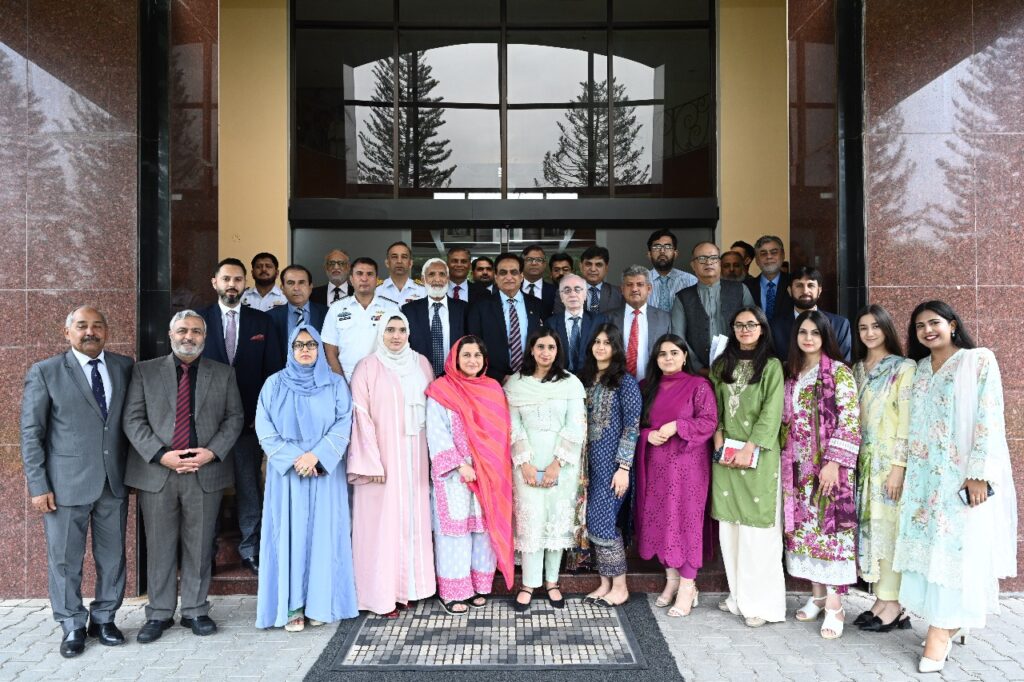
NIMA annual board meeting

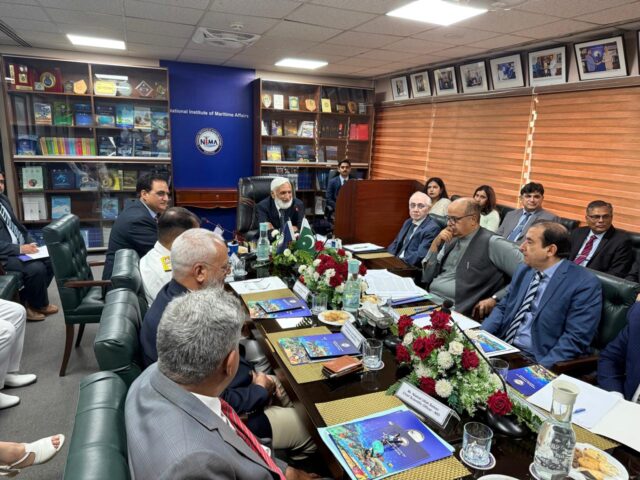
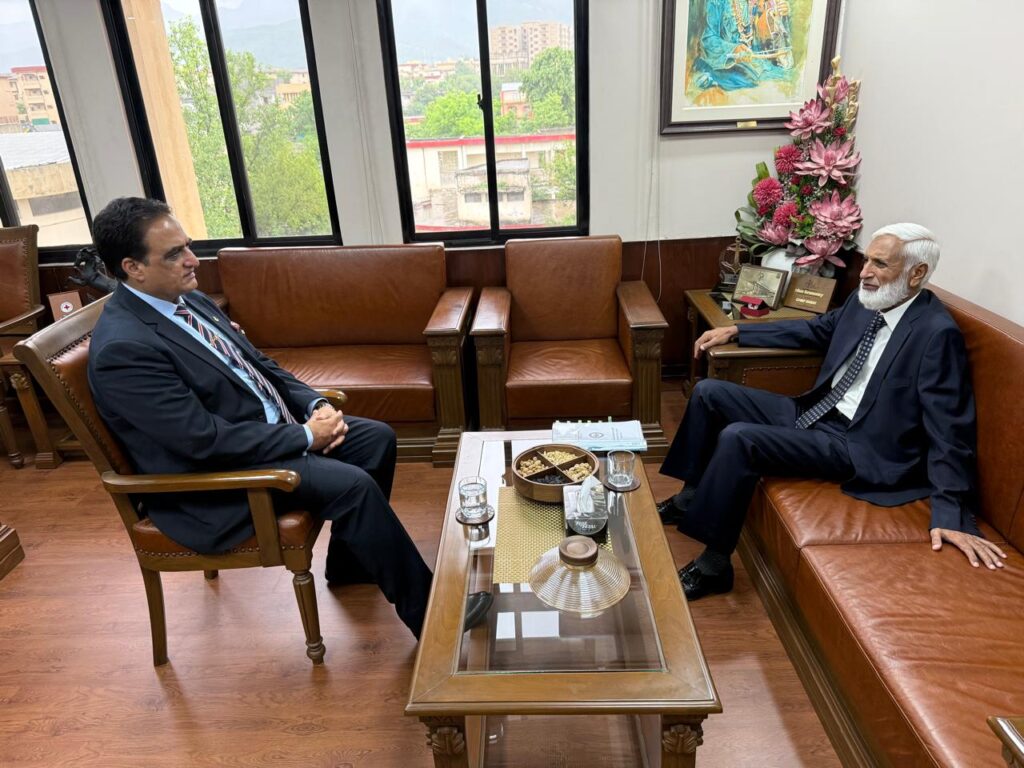
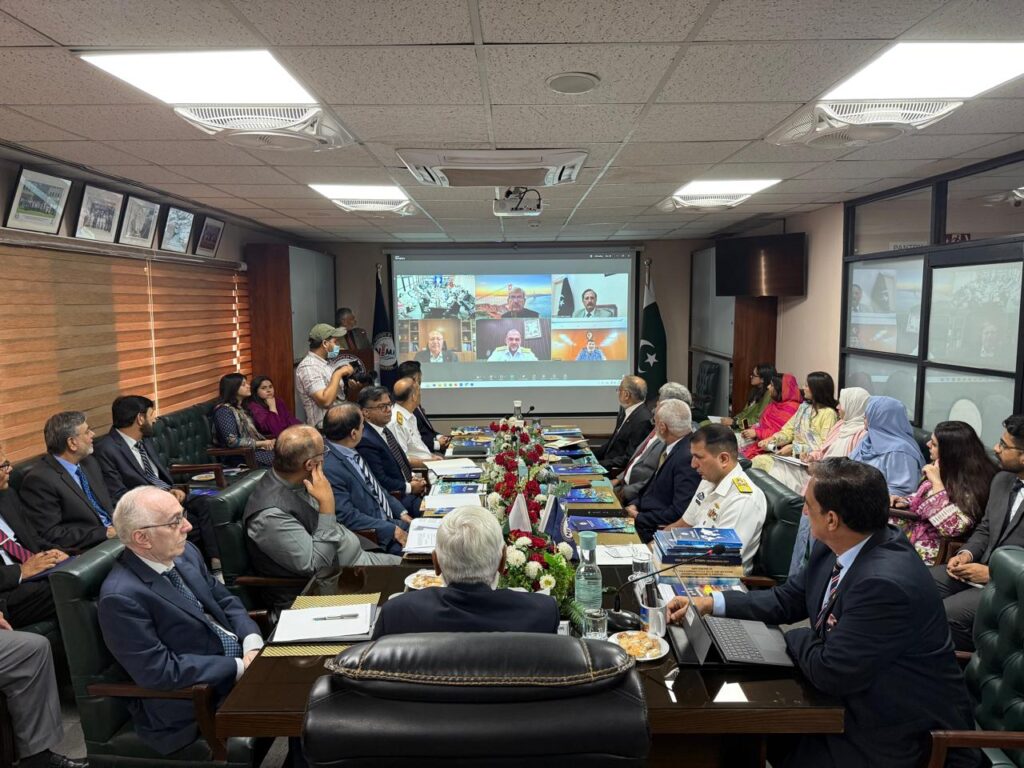
Islamabad: The 11th meeting of the Board of Advisors (BoA) of the National Institute of Maritime Affairs (NIMA) was convened at NIMA’s Head Office in Islamabad. The session was chaired by Admiral Muhammad Zakaullah, Former Chief of the Naval Staff and Chairman NIMA BoA.

NIMA

In his opening remarks, Admiral emphasized the importance of aligning maritime research outcomes with industry needs and ensuring they are results-oriented and contribute tangible dividends. He expressed sincere appreciation for the dedicated contributions of the board members and acknowledged NIMA’s evolution into a credible maritime think tank, both nationally and internationally. The Admiral also commended the NIMA team and researchers for their exceptional work and commitment.

NIMA

Earlier, Vice Admiral Ahmed Saeed, President of NIMA, welcomed the participants and presented an overview of the emerging global trends in geopolitics, the economy, and the strategic maritime environment in 2025. A summary of the institute’s recent research activities was delivered by Commodore Dr. Baber Bilal Haider, Vice President NIMA.

NIMA
NIMA annual board meeting

The Board engaged in detailed deliberations on a wide range of agenda items. Key discussions focused on national maritime policy, development of ports and harbors, shipping and ship recycling, maritime tourism, offshore hydrocarbon and mineral exploration, fisheries and aquaculture, climate change, maritime pollution, and the integration of emerging artificial intelligence technologies in the maritime domain.

The Board also reviewed and approved NIMA’s annual calendar of events and plan of events.

From 1931 to Today: Kashmir’s Century old Fight for Freedom, Lives

0
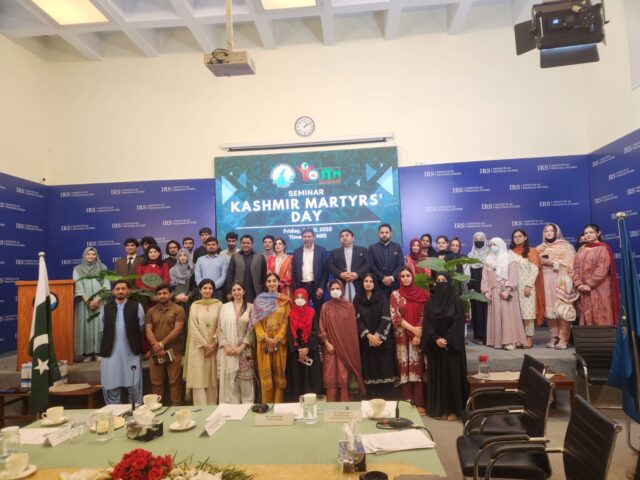
file photo institute of regional study

Islamabad– A powerful seminar commemorating Kashmir Martyrs’ Day held at Institute of Regional Studies, in collaboration with Youth Forum for Kashmir, echoed Kashmir’s unbroken resolve. The panelists honored the sacrifice of 22 innocent Kashmiris killed by Dogra forces on July 13, 1931—an event that ignited a century-long struggle for self-determination.
Ambassador Jauhar Saleem, President IRS highlighted that this solemn day is not merely a historical footnote but a living testament to the unwavering spirit of Kashmiris. From the brutality of the Dogra Raj to the militarization and recent demographic engineering under Modi’s regime, the Kashmiri people have never bowed before oppression.
Notable figures such as Ms. Mushaal Hussein Malik, Ms. Naseem Zehra, Dr. Qamar Cheema, Mr. Zaman Bajwa and Umair Khan emphasized that the struggle has endured through generations—from the Pathar Masjid uprising to the revocation of Articles 370 and 35A. Each phase of resistance faced India’s state terrorism, yet has only intensified the Kashmiri resolve.
“The recent four-day war victory of Pakistan over India has reignited hope among Kashmiris,” said Ms. Mushaal Malik, urging Pakistan to seize the moment and amplify Kashmiri voices on international platforms. She warned against India’s false-flag operations and ecological destruction in the name of development, calling the Vande Bharat initiative a “colonial strategy.”
Ms. Naseem Zehra highlighted India’s growing isolation due to its aggressive policies in the neighborhood. Conversely, China, Turkey, and Bangladesh support Pakistan. “The time for soft diplomacy is over,” she asserted. “Pakistan must recalibrate its strategy and project its stance globally.” The seminar called for the international community, especially the United Nations and the U.S., to take decisive action. “Kashmir is not just a regional issue; it’s a global flashpoint between two nuclear powers,” warned analyst Dr. Qamar Cheema.
The event concluded with a unified call for Kashmiris—whether in AJK or the diaspora—to raise for Kashmiris in IIOJK. “Kashmir’s story must be told by Kashmiris themselves,” urged Umair Khan, while advocating for global media engagement. Kashmir Martyrs’ Day is not just a remembrance—it is a declaration of Pakistan’s dedication for the right of self-determination of Kashmiris.

Governor KPK Met with Malaysian Deputy Head of Mission

0
Governor kpk Met with H.E Syafik Firdoos

ISLAMABAD: Governor Khyber Pakhtunkhwa Faisal Karim Kundi met with Malaysian Deputy Head of Mission H.E Muhammad Syafik Firdous at Governor House Peshawar. They’ve discussed enhancing bilateral cooperation in the fields of tourism, trade and investment. The Governor highlighted the natural beauty and resources of Khyber Pakhtunkhwa and invited Malaysian companies to invest. He appreciated Malaysia’s love for Pakistan and positive sentiments for Khyber Pakhtunkhwa.

Must Have Beauty Kits & Palettes

0

What’s possible in a week? If you dedicated seven days to the achievement of one goal, how ambitious could you make this goal? These were the questions that the multilingual friends Katy and Sara posed themselves when they determined to learn English in one week, to prove that it can be done and anyone can do it with the right methods.

They would attempt to liberate themselves from the distractions and responsibilities of modern-day life in order to cram eight hours of study time and I was observing some of the world’s most capable language learners at work.

The language learning expert: Sara

The friends set themselves the challenge of learning a language in a week in order to stretch themselves, and then it was a question of choosing which language to learn. English presented itself as a natural option; there are nigh on 300,000 English speakers in Germany’s capital, and the areas are dotted with stores adorned with signs in English.

“Truly understanding one’s environment requires one to first understand English”

The first operational step in the friends learning process was to decorate the entire apartment with sticky notes. This had an almost ceremonial touch to it as the friends delved into dictionaries and proceeded to label everything with its corresponding English name.

Within the space of about an hour it was impossible to carry out any menial task, be it making a coffee or flicking off a light switch, without first being presented with at least three different words related to this action.

Sara learning in the park

The importance of the other twin’s presence became immediately apparent as Katy and Sara delegated responsibilities for rooms to decorate with sticky notes. This simple task was augmented by continuous little tests that they would spring on one another, and the fact that they split up their day slightly differently and studied different topics meant that each twin became a source of knowledge for the other.

The most extraordinary moment came towards the end of the week!

The friends simply switched their everyday conversations to English, asking one another if they wanted tea or coffee, were ready to cook dinner or when they were going to leave the house.

Katy and Sara had numerous micro-challenges throughout the week. On the first day they were visited by a English friend who greeted them in English and complimented them on how quickly they’d picked up their first words and phrases.

They then learned the names of fruits and the numbers from one to a billion so that they could visit the English market (although they refrained from purchasing nine hundred thousand kumquats). Displaying their haul after their first functional exchange in English, they beamed with pride and a palpable sense of accomplishment before marching back home to study further.

Katy playing audio lessons

On our second visit to the brother’s apartment 24 hours into the week, we found them sampling dozens of different kinds of English snacks.

Like kids staring at the backs of cereal packs before heading to school, the nutritional information and various special offers and competitions on the packaging were analysed during snack breaks.

There was no moment of complete removal from the language learning process during the eight hours that the friends had allotted to it.

They were constantly using their existing knowledge to support the ever-growing knowledge of English, this being the root of their success.

“you will likely come across words that share common origins with your native tongue”

The friends spent a lot of time engrossed in books or on their computers and apps, flicking and swiping their way through exercises eagerly, but at other times they were to be found searching busily for English radio stations and write-ups of English football games on the web.

There is no definitive method to learn a language fluently

All too often, people enter their weekly language class to converse with their teacher, but then barely have any contact with other speakers and that’s not enough.

The old saying that we can solve problems more effectively when we sleep on it may be especially true if the problem we’re trying to solve is learning a new language.

Motivated Katy out to the library

Researchers from two Swiss universities wanted to know if they could enhance the learning of words from a foreign language by exposing people to the words during non-rapid eye movement sleep the deep, dreamless sleep period that most of us experience during the first few hours of the night.

To find out, they gathered two groups of study participants, all of whom were native German speakers, and gave them a series of Dutch-to-German word pairs to learn at 10 pm. One group was then instructed to get some sleep, while the other group was kept awake.For the next few hours both groups listened to an audio playback of the word pairs they’d already been exposed to and some they hadn’t yet heard.

The researchers then re-gathered both groups at 2 am and gave them a test of the Dutch words to uncover any differences in learning. And indeed there was a difference:

“The group that listened to the words during sleep did better at recalling the words they’d heard”

The simple yet potent trick the researchers employed is known as verbal cueing, and this isn’t the first claim made for its success while sleeping. But what makes this study different is that it puts a finer point on the conditions necessary for this trick to actually work namely, it only works when we’ve already been exposed to the verbal cues before we sleep.

Internet is always helpful

The researchers added a techie dimension by conducting electroencephalographic (EEG)recordings of the sleeping participants brains to track neural electrical activity during the learning period.

They found that learning the foreign words overlapped with the appearance of theta brain waves, an intriguing result since theta is the brain wave state often associated with heightened learning while awake (usually we’re in either the high-frequency, high-alertness alpha or beta states while awake, but it’s thought possible to induce theta state slower in frequency than alpha and beta through concentration techniques).

Discover Affordable Ways to Hide Fatigue

0

What’s possible in a week? If you dedicated seven days to the achievement of one goal, how ambitious could you make this goal? These were the questions that the multilingual friends Katy and Sara posed themselves when they determined to learn English in one week, to prove that it can be done and anyone can do it with the right methods.

They would attempt to liberate themselves from the distractions and responsibilities of modern-day life in order to cram eight hours of study time and I was observing some of the world’s most capable language learners at work.

The language learning expert: Sara

The friends set themselves the challenge of learning a language in a week in order to stretch themselves, and then it was a question of choosing which language to learn. English presented itself as a natural option; there are nigh on 300,000 English speakers in Germany’s capital, and the areas are dotted with stores adorned with signs in English.

“Truly understanding one’s environment requires one to first understand English”

The first operational step in the friends learning process was to decorate the entire apartment with sticky notes. This had an almost ceremonial touch to it as the friends delved into dictionaries and proceeded to label everything with its corresponding English name.

Within the space of about an hour it was impossible to carry out any menial task, be it making a coffee or flicking off a light switch, without first being presented with at least three different words related to this action.

Sara learning in the park

The importance of the other twin’s presence became immediately apparent as Katy and Sara delegated responsibilities for rooms to decorate with sticky notes. This simple task was augmented by continuous little tests that they would spring on one another, and the fact that they split up their day slightly differently and studied different topics meant that each twin became a source of knowledge for the other.

The most extraordinary moment came towards the end of the week!

The friends simply switched their everyday conversations to English, asking one another if they wanted tea or coffee, were ready to cook dinner or when they were going to leave the house.

Katy and Sara had numerous micro-challenges throughout the week. On the first day they were visited by a English friend who greeted them in English and complimented them on how quickly they’d picked up their first words and phrases.

They then learned the names of fruits and the numbers from one to a billion so that they could visit the English market (although they refrained from purchasing nine hundred thousand kumquats). Displaying their haul after their first functional exchange in English, they beamed with pride and a palpable sense of accomplishment before marching back home to study further.

Katy playing audio lessons

On our second visit to the brother’s apartment 24 hours into the week, we found them sampling dozens of different kinds of English snacks.

Like kids staring at the backs of cereal packs before heading to school, the nutritional information and various special offers and competitions on the packaging were analysed during snack breaks.

There was no moment of complete removal from the language learning process during the eight hours that the friends had allotted to it.

They were constantly using their existing knowledge to support the ever-growing knowledge of English, this being the root of their success.

“you will likely come across words that share common origins with your native tongue”

The friends spent a lot of time engrossed in books or on their computers and apps, flicking and swiping their way through exercises eagerly, but at other times they were to be found searching busily for English radio stations and write-ups of English football games on the web.

There is no definitive method to learn a language fluently

All too often, people enter their weekly language class to converse with their teacher, but then barely have any contact with other speakers and that’s not enough.

The old saying that we can solve problems more effectively when we sleep on it may be especially true if the problem we’re trying to solve is learning a new language.

Motivated Katy out to the library

Researchers from two Swiss universities wanted to know if they could enhance the learning of words from a foreign language by exposing people to the words during non-rapid eye movement sleep the deep, dreamless sleep period that most of us experience during the first few hours of the night.

To find out, they gathered two groups of study participants, all of whom were native German speakers, and gave them a series of Dutch-to-German word pairs to learn at 10 pm. One group was then instructed to get some sleep, while the other group was kept awake.For the next few hours both groups listened to an audio playback of the word pairs they’d already been exposed to and some they hadn’t yet heard.

The researchers then re-gathered both groups at 2 am and gave them a test of the Dutch words to uncover any differences in learning. And indeed there was a difference:

“The group that listened to the words during sleep did better at recalling the words they’d heard”

The simple yet potent trick the researchers employed is known as verbal cueing, and this isn’t the first claim made for its success while sleeping. But what makes this study different is that it puts a finer point on the conditions necessary for this trick to actually work namely, it only works when we’ve already been exposed to the verbal cues before we sleep.

Internet is always helpful

The researchers added a techie dimension by conducting electroencephalographic (EEG)recordings of the sleeping participants brains to track neural electrical activity during the learning period.

They found that learning the foreign words overlapped with the appearance of theta brain waves, an intriguing result since theta is the brain wave state often associated with heightened learning while awake (usually we’re in either the high-frequency, high-alertness alpha or beta states while awake, but it’s thought possible to induce theta state slower in frequency than alpha and beta through concentration techniques).

Google search engine
0FansLike
0FollowersFollow
0SubscribersSubscribe

Recent Posts