

ISLAMABAD :(The News Mark)
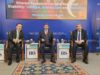
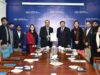
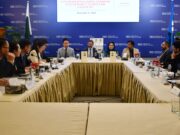
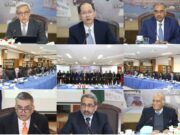
On December 18, 2025, the Embassy hosted a roundtable discussion titled “Russia-Pakistan: Overview of the Modern Stage of Bilateral Relations,” organized in collaboration with the Consortium for Asia Pacific and Eurasian Studies (CAPES). The event brought together over 40 representatives from universities and research institutions from various Pakistani cities, including Islamabad, Peshawar, Lahore, Faisalabad, Karachi, Sargodha, and Okara.
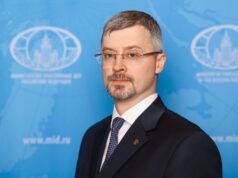
The Russian side was represented by Ambassador Albert P. Khorev and Denis Nevzorov, the Trade Representative of Russia in Islamabad.
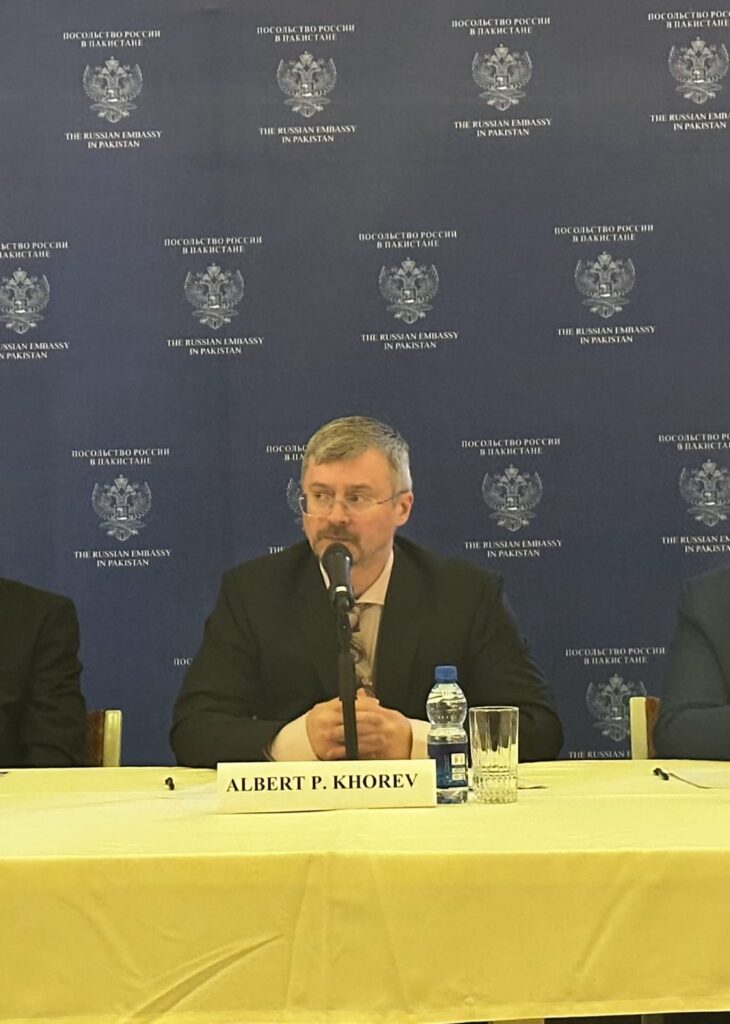
In his opening remarks, Ambassador Khorev noted the growing dynamics of the Russia-Pakistan political dialogue and the intensified contacts between the two countries’ legislative bodies. He also emphasized the steady development of cultural ties and the constructive interaction between religious organizations in Russia and Pakistan. He added that the populations of both countries were united by their commitment to traditional spiritual and moral values. In this regard, the Ambassador confirmed Russia’s readiness to increase efforts to implement joint projects aimed at deepening cooperation between the two friendly neighboring countries within the Eurasian region.

Mr. Nevzorov informed the participants of the key trends in bilateral trade and economic cooperation in 2025. He also presented the 16th INNOPROM International Industrial Exhibition, which will take place in Yekaterinburg, Russia, on July 6–9, 2026.
Dr. Gul-i-Ayesha Bhatti, Assistant Professor at the Jinnah School of Public Policy at NUST University and Director of CAPES Eurasian Charter, highlighted the political and diplomatic dimensions of Russia-Pakistan relations. She emphasized the significant role of the Russian Embassy in strengthening the ties between the two countries’ academic communities. She also highlighted the positive results achieved during the 10th meeting of the Russia-Pakistan Intergovernmental Commission. Dr. Bhatti expressed her high appreciation for Russian initiatives aimed at expanding constructive cooperation between Moscow and Islamabad, the two capitals that closely coordinate their efforts within the SCO and other international and regional platforms.
Associate Professor at the University of Sargodha Dr. Sundas Khizar presented an analysis of economic cooperation between Russia and Pakistan, focusing on the implementation of new infrastructure projects aimed at expanding bilateral trade. She stressed the urgency of increasing Russian petroleum product supplies to Pakistan, a country facing increased hydrocarbon demand. Dr. Khizar confirmed the high importance of the Greater Eurasian Partnership initiative, presented by Russian President Vladimir Putin. The initiative’s relevance is steadily increasing amidst the diminishing international influence of Western countries

In his speech, Prof. Dr. Shabir Ahmad Khan of the University of Peshawar’s Area Studies Center emphasized that Russia and Pakistan have achieved significant results in cultural cooperation despite growing international tensions. At the same time, he acknowledged the language barrier between the populations of the two states. In this regard, Prof. Dr. Shabir Ahmad Khan welcomed Russia’s efforts to organize Russian language courses at Pakistani universities and schools.
The Vice Chancellor of the University of Okara, Prof. Dr. Sajjad Mubin, highlighted the importance of educational exchanges between the two countries. He emphasized the high status of Pakistani graduates of Soviet and Russian universities in Pakistani society. Considering the high standards of education at Russian universities, he advocated for initiatives that would provide more opportunities for Pakistani citizens to study in Russia. To this end, he recommended continuing the practice of organizing joint conferences and seminars to define optimal ways to expand educational exchanges.
The Vice Chancellor of the Faisalabad Agriculture University, Prof. Dr. Zulfiqar Ali, drew attention to the urgent need for Russia and Pakistan to expand their agricultural cooperation. He emphasized the importance of this area for improving regional food security and strengthening Pakistan’s economic stability. He praised the Russian agricultural sector’s development, highlighting the exceptional quality of Russian agricultural products. Dr. Ali stated that Pakistan requires Russian agricultural technologies, including machinery and fertilizers, to increase its agricultural productivity. Furthermore, he advocated for the establishment of additional Russian language courses at Pakistani educational institutions to reduce the language barrier between the two countries’ citizens.

Further discussions produced initiatives aimed at strengthening bilateral people-to-people contacts. These initiatives included resuming direct flights between the two countries, launching joint educational programs at Russian and Pakistani universities, and translating Russian classical and modern literary works into Urdu.
The event confirmed the strong interest of the Pakistani academic and scientific communities in further enhancing dialogue with the Russian Federation and expanding economic, cultural, educational, and humanitarian ties between the citizens of the two friendly states